How we chose
We assessed current Australian exact models, availability, street pricing, CHOICE cooking-test presence, zone layout, low- and high-heat capability, bridge or flex functions, control usability, electrical load, cut-out dimensions, owner evidence, brand reliability, warranties, replacement fit and value. Manufacturer specifications, owner reports, professional testing and brand-level evidence remain separately attributed. Worth Buying Australia has not conducted laboratory cooking tests on these cooktops.
Serious contenders reassessed
Bosch PUJ611BB5H has excellent evidence and a low 4.6kW load, but only three zones; Electrolux supplies four zones and Bridge at similar money. The four-zone Bosch PUE611BB5H was a serious value contender at about $899, though Westinghouse provides the more complete Bridge, BoilProtect and Hob2Hood feature set.
Fisher & Paykel CI604CTPB1 is a credible 4.4kW / 19.1A retrofit alternative, but Electrolux adds Bridge, Hob2Hood, a longer standard warranty and lower research-date price. Electrolux EHI645BF was cheaper during research, yet it is not the same current PowerReady 20A architecture. New Fisher & Paykel Series 7 models remain promising but their owner evidence is young. AEG and Smeg also offer credible cooktops; neither produced a cleaner combined model-level evidence and value case for these three roles.
Westinghouse 60cm 4-Zone Induction Cooktop with BoilProtect WHI645BE
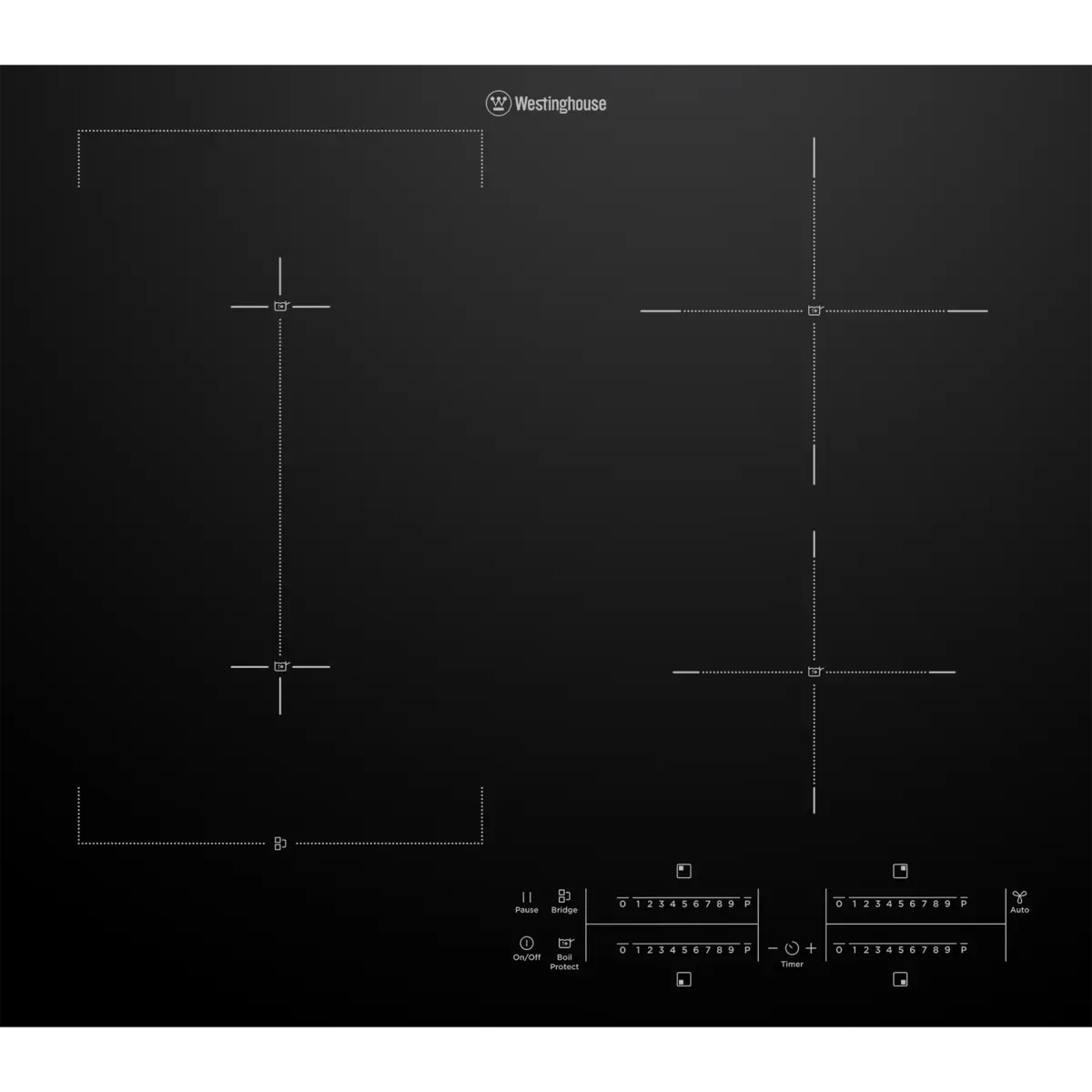
Exact Westinghouse WHI645BE shown.
WHI645BE gives a family kitchen four zones across a familiar 590mm-wide surface. The left pair can bridge for a griddle or long pan, while PowerBoost, Pause, QuickCook timing and touch sliders cover the functions most people will use. Hob2Hood can coordinate a compatible rangehood, and BoilProtect is designed to detect rising bubbles and reduce heat before a spill.
BoilProtect is useful automation, not a licence to walk away from cooking. It works under Westinghouse's stated cookware and water conditions and should not be presented as universal spill prevention. The bridge is limited to the left side, and wet or greasy fingers can still make glass touch controls less pleasant than physical controls.
The 7.35kW connected load and 32A maximum current are central to the buying decision. This is not a low-current retrofit model. A licensed electrician must confirm the dedicated circuit, switchboard capacity, cabling and isolation requirements. In a suitable renovation it delivers more simultaneous-power headroom than the 4.6kW Electrolux, but electrical work can outweigh a small difference in cooktop price.
What owners and testers say
Pros
- Four practical zones with left Bridge pair
- BoilProtect, Hob2Hood and PowerBoost
- Strong exact-model Australian owner evidence
- Exact-model CHOICE testing
- Competitive mainstream pricing
Cons
- 7.35kW / 32A supply can add installation cost
- Only a two-year standard warranty
- Bridge function is on one side only
- Touch sliders dislike wet or greasy fingers
- $1,099 research price was promotional
Electrolux 60cm 4-Zone PowerReady Induction Cooktop EHI644BF
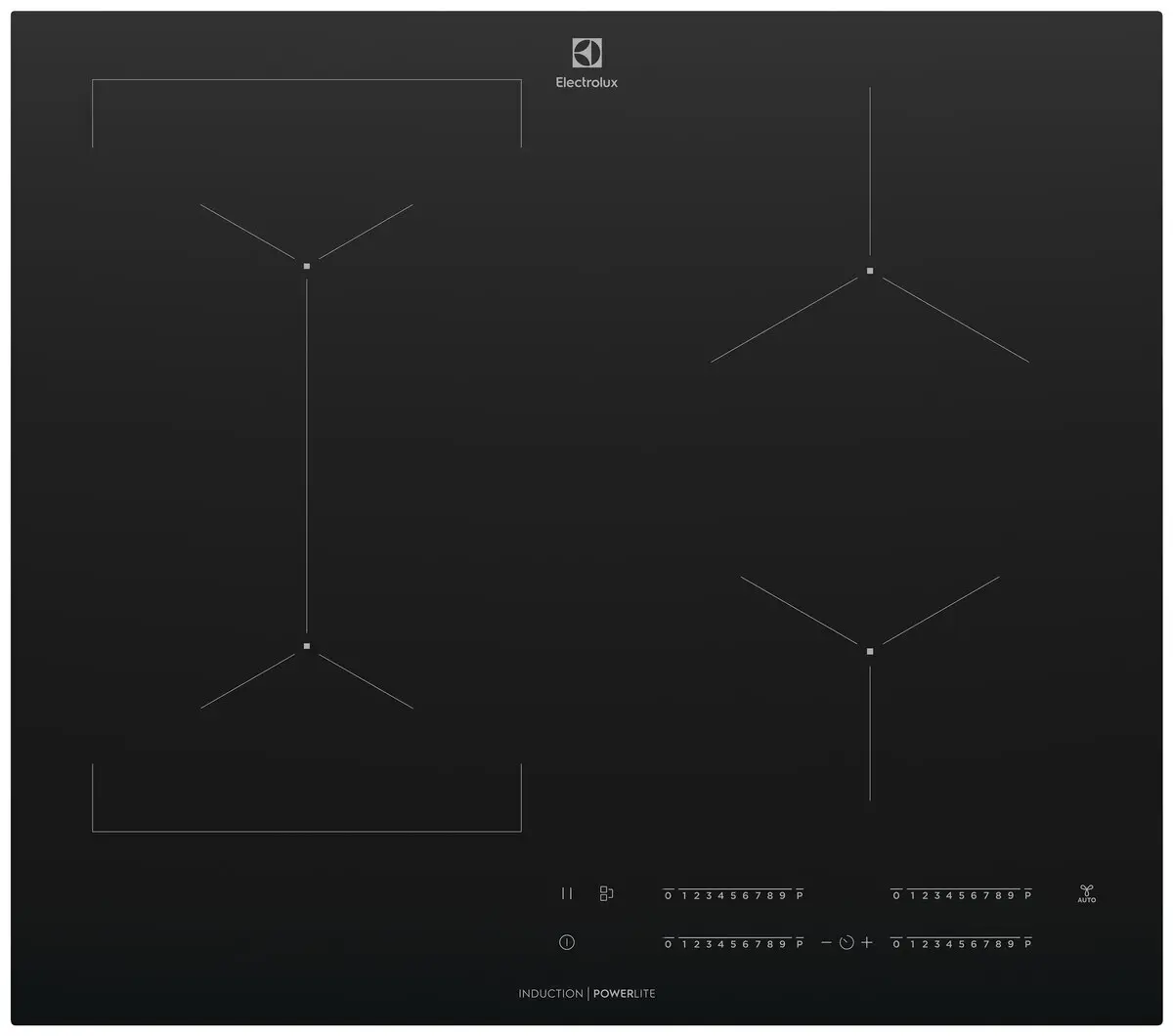
Exact Electrolux EHI644BF shown.
PowerReady is the reason to choose EHI644BF. Many mainstream four-zone induction cooktops sit above 7kW and may require more circuit or switchboard work. Electrolux limits this model to 4.6kW and 20A, potentially making replacement of gas or ceramic more practical in apartments and older homes.
It is still a built-in, hardwired appliance. “Low current” does not mean it plugs into a normal power point or can be installed without an electrician. A licensed professional must assess the actual circuit, isolation, switchboard and local requirements. No guide can promise that existing wiring is suitable in every home.
The trade-off is power sharing. Four zones do not gain the simultaneous maximum output of a conventional 7.35kW design, so households that regularly run several large pans on maximum heat may prefer Westinghouse. For ordinary mixed cooking, the four-zone layout, Bridge, PowerBoost, Hob2Hood, Pause and touch sliders remain a strong feature set. The three-year warranty for qualifying purchases after 1 March 2026 is also better than the two-year coverage on the other finalists.
What owners and testers say
Pros
- 4.6kW / 20A design can simplify some conversions
- Four zones and Bridge despite lower load
- PowerBoost, Hob2Hood and touch sliders
- Three-year standard warranty under current terms
- Exact-model CHOICE testing
Cons
- Power management limits simultaneous maximum output
- Still requires licensed hardwired installation
- Owner pool is smaller than Westinghouse
- Low-current design is unnecessary with abundant supply
- Touch controls retain normal wet-finger compromises
Miele 62cm PowerFlex Induction Cooktop KM 7464 FL
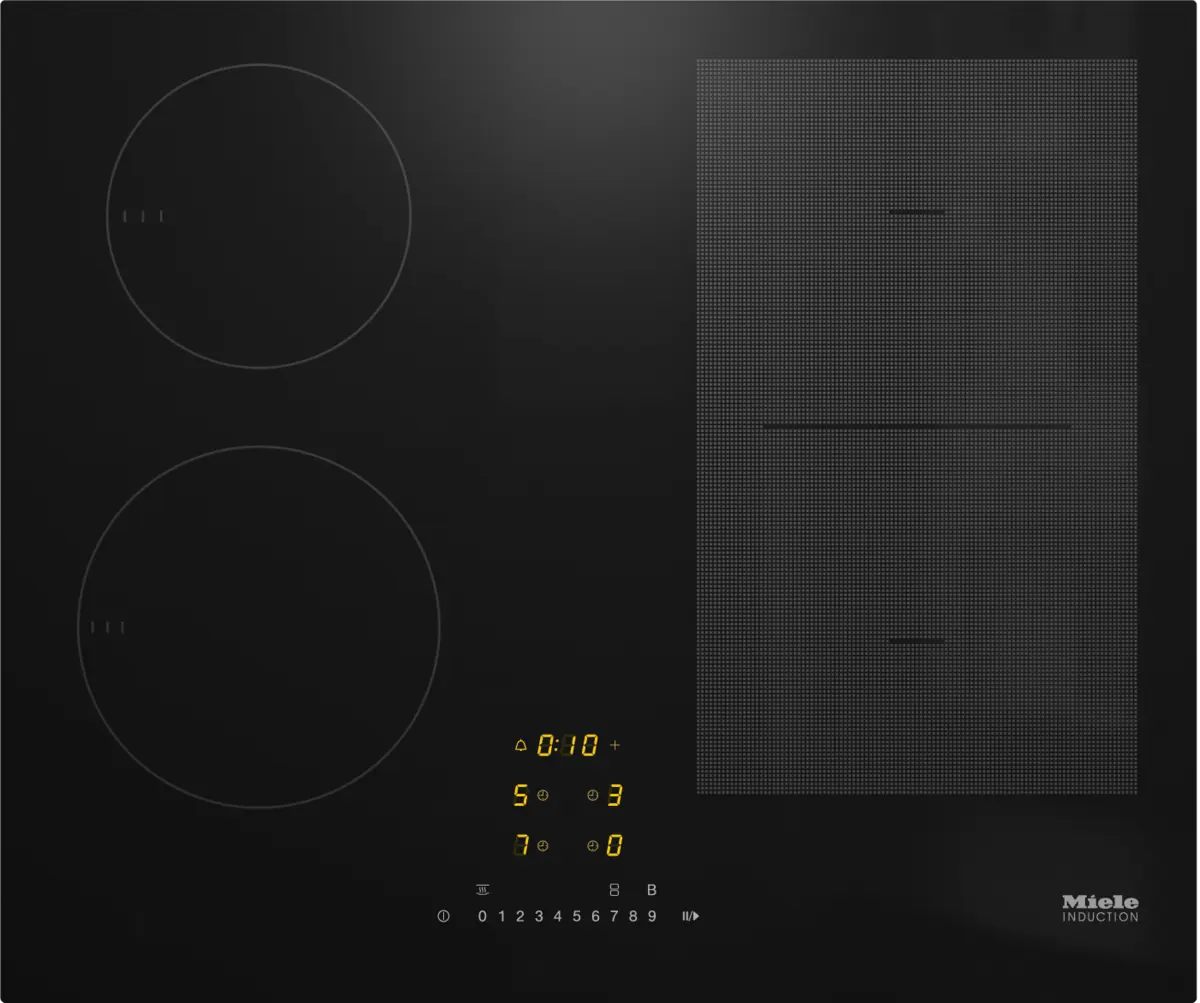
Exact Miele KM 7464 FL shown.
KM 7464 FL is a 620mm cooktop with four zones and a PowerFlex area that can combine zones for larger cookware. TwinBooster adds short bursts of power, while ComfortSelect, Stop & Go, Recall, Keep Warm, automatic heat-up and pan-size recognition make the control system more complete than a basic mainstream surface.
Con@ctivity can coordinate compatible Miele rangehoods, which is useful in a matching premium kitchen but less compelling as a standalone reason to spend. The cooktop can be installed flush or surface-mounted under its installation rules. Its approximately 600 × 500mm cut-out is larger than the common 560 × 490mm opening used by Westinghouse and Electrolux, so replacement fit must be checked carefully rather than treating every “60cm” cooktop as interchangeable.
The price is the decisive weakness. The research-date promotion was about $2,969.10 from a $3,299 regular price—roughly three times capable mainstream alternatives. Standard coverage is still only two years; paid five- or ten-year extensions may be available but are not included. Miele's strong brand reliability and satisfaction results are meaningful context, yet they do not transform six hosted model reviews into broad owner consensus or prove this exact model cooks three times better.
What owners and testers say
Pros
- Flexible PowerFlex cooking area
- Refined ComfortSelect and TwinBooster controls
- Con@ctivity for compatible Miele rangehoods
- Flush or surface installation options
- Strong professional and brand context
Cons
- About $3,000 even on research-date promotion
- Only a two-year standard warranty
- Public exact-model owner evidence is tiny
- 620mm width and larger cut-out complicate replacement
- Best integration depends on other Miele appliances
What to know before buying an induction cooktop
Electrical supply can cost more than the model difference
A conventional four-zone surface can require around 32A and a dedicated circuit. Switchboard or cabling work can easily outweigh a modest appliance-price gap. A licensed electrician must assess the product, circuit, isolation and home before purchase.
Low current has a performance trade-off
A 4.4–4.6kW cooktop has less total output available than a 7.3kW model. When several zones run hard, power management may share the available capacity. That is a deliberate trade-off for potentially easier installation, not evidence that the cooktop is bad.
Cookware must be magnetic
If a magnet sticks firmly to a pan's base, it will usually work on induction. Not every stainless-steel pan is compatible, and a magnetic patch that is much smaller than the pan can still heat unevenly. Check the cookware and manufacturer guidance.
Zone layout matters more than the count alone
Four tightly spaced zones are not automatically more useful than three well-sized ones. Compare pan diameter, spacing, control placement and the cookware used most often. Several large pans can crowd a 60cm surface.
Bridge and flex zones have limits
They are useful for griddles, roasting pans and long cookware. They do not necessarily turn the whole glass surface into a free-placement cooking area. Check which zones combine and how power is distributed.
Control design affects every meal
Direct sliders can be faster than repeated plus/minus presses, but all-glass controls vary in sensitivity with wet fingers, spills and bright light. Timers, individual-zone access and clear feedback matter more than a long list of rarely used modes.
Glass is tough, not indestructible
Do not drag rough cookware, trap grit under pots, drop heavy pans or let sugary spills burn onto the surface. Use the manufacturer's cleaning method and lift cookware when moving it.
Measure the cut-out, not the marketing width
Westinghouse and Electrolux use a 560 × 490mm cut-out; the 620mm Miele needs about 600 × 500mm. Benchtop material, clearances and cabinet ventilation can make even small differences expensive.
Licensed installation required
All three recommendations are built-in hardwired appliances. An appropriately licensed electrician must handle installation and confirm supply, protection, isolation and compliance. “Low current” never means DIY mains wiring or a normal plug-in appliance.
Which one should you buy?
Choose the Westinghouse WHI645BE for the strongest all-round mix of four-zone flexibility, Bridge cooking, useful automation, mature evidence and mainstream pricing—provided the site can support its 7.35kW / 32A load.
Choose the Electrolux EHI644BF when the electrical side of replacing gas or ceramic is the central problem. Its 4.6kW / 20A PowerReady design keeps four zones but accepts lower simultaneous maximum output.
Choose the Miele KM 7464 FL when budget is secondary and PowerFlex, refined controls and Miele rangehood integration are worth paying for. It is a premium choice, not the value winner.
Frequently asked questions
Is induction better than gas?
Induction is fast, responsive, efficient at transferring heat to the pan and easier to wipe clean. Gas provides visible flame control and works with a wider range of cookware. The better choice depends on electrical capacity, ventilation, cookware, cooking preferences and installation cost rather than a universal winner.
Do I need special wiring for an induction cooktop?
Often. Built-in induction cooktops are commonly hardwired and can require a dedicated circuit. The Westinghouse is rated at 7.35kW / 32A; the Electrolux PowerReady design is 4.6kW / 20A. A licensed electrician must assess the actual home and model before purchase.
What is a low-current induction cooktop?
It limits total connected load so it may be easier to install where electrical capacity is constrained. The compromise is power management when several zones demand high output simultaneously. Low current does not mean plug-in or DIY installation.
Do I need new cookware for induction?
Only if existing pans are not magnetically compatible or their bases do not suit the zone sizes. A firm magnet test is a useful first check, but consult the pan and cooktop guidance. Cast iron and many magnetic stainless-steel pans work; aluminium or copper usually needs a bonded magnetic base.
Is a bridge zone worth having?
It is valuable if you use a griddle, fish pan or long roasting cookware. For households that mostly use ordinary round saucepans, it is less important. Check which zones bridge and whether the supported pan size matches what you own.