
Coffee grinders compared
Detailed comparison
| What matters | DF54 Coffee Grinder | Baratza Encore ESP | Eureka Mignon Specialità 55 |
|---|---|---|---|
| Award | Best overall | Best value | Best for espresso |
| Worth Buying score | 9.1/10 | 8.8/10 | 8.9/10 |
| Main use | Espresso and changing beans | Espresso plus other brewing methods | Regular espresso from the same beans |
| Burrs | 54 mm flat steel | Conical steel | 55 mm flat steel |
| Grind adjustment | No fixed steps | 40 numbered steps; two adjustment ranges | No fixed steps |
| Preparing beans | Weigh a portion for each coffee | Keep beans ready in the hopper | Keep beans ready in the hopper |
| Controlling the portion | Weigh the beans before grinding | Start and stop grinding yourself | Two saved times; check with a scale |
| Where the grounds go | Dosing cup | Espresso cup or filter grounds bin | Directly into a supported espresso handle |
| Changing beans | Straightforward to prepare the next bean; some grounds may remain | Empty the hopper and account for grounds left inside | More clearing and setup than a single-dose routine |
| Switching brewing methods | Record and recheck the dial position | Numbered settings are easy to note and revisit | Returning to espresso takes care |
| Main compromise | More preparation for consecutive drinks | No position between clicks; manual stopping | Timer does not weigh; small dial and holder need care |
DF54 Coffee Grinder
- Award
- Best overall
- Worth Buying score
- 9.1/10
- Main use
- Espresso and changing beans
- Burrs
- 54 mm flat steel
- Grind adjustment
- No fixed steps
- Preparing beans
- Weigh a portion for each coffee
- Controlling the portion
- Weigh the beans before grinding
- Where the grounds go
- Dosing cup
- Changing beans
- Straightforward to prepare the next bean; some grounds may remain
- Switching brewing methods
- Record and recheck the dial position
- Main compromise
- More preparation for consecutive drinks
Baratza Encore ESP
- Award
- Best value
- Worth Buying score
- 8.8/10
- Main use
- Espresso plus other brewing methods
- Burrs
- Conical steel
- Grind adjustment
- 40 numbered steps; two adjustment ranges
- Preparing beans
- Keep beans ready in the hopper
- Controlling the portion
- Start and stop grinding yourself
- Where the grounds go
- Espresso cup or filter grounds bin
- Changing beans
- Empty the hopper and account for grounds left inside
- Switching brewing methods
- Numbered settings are easy to note and revisit
- Main compromise
- No position between clicks; manual stopping
Eureka Mignon Specialità 55
- Award
- Best for espresso
- Worth Buying score
- 8.9/10
- Main use
- Regular espresso from the same beans
- Burrs
- 55 mm flat steel
- Grind adjustment
- No fixed steps
- Preparing beans
- Keep beans ready in the hopper
- Controlling the portion
- Two saved times; check with a scale
- Where the grounds go
- Directly into a supported espresso handle
- Changing beans
- More clearing and setup than a single-dose routine
- Switching brewing methods
- Returning to espresso takes care
- Main compromise
- Timer does not weigh; small dial and holder need care
DF54 Coffee Grinder
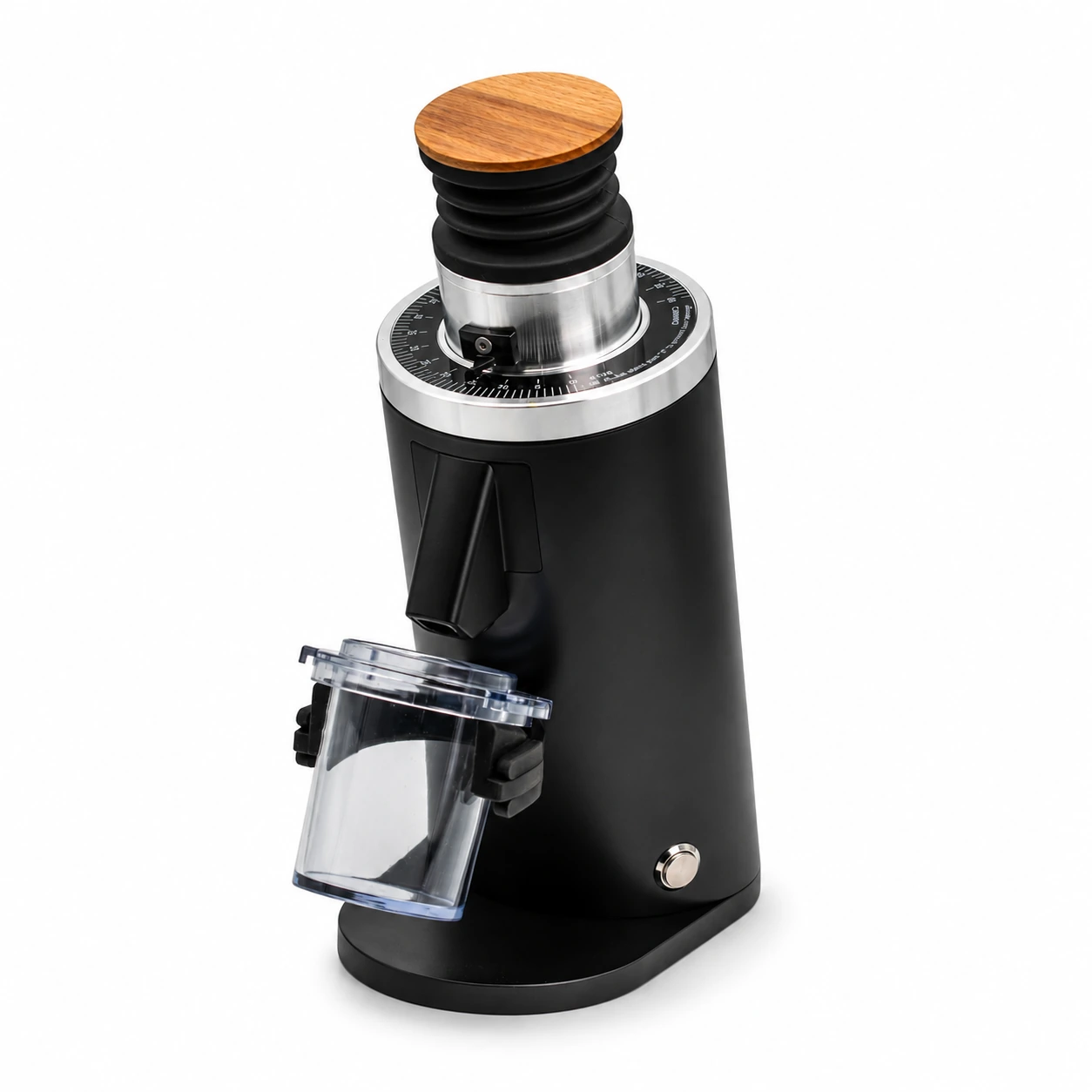
The DF54 is our Best overall pick for someone who likes adjusting their espresso and trying different beans. Its dial has no fixed clicks, and it covers espresso and coarser brewing methods. It asks more of you between drinks than a grinder set up to dispense repeated portions from a hopper.
You add the beans you want to use now, rather than leaving a supply in a hopper. Coffee collects in the dosing cup, ready to pour into your espresso basket or brewer. This keeps the rest of your beans stored separately and makes it easy to change coffees.
The adjustment collar turns without fixed stops. That gives you room for small changes when an espresso runs too quickly or slowly. The numbers are reference points, so switching from espresso to filter still means finding and checking the setting that works for your coffee.
Specifications
| Burrs | 54 mm flat stainless steel |
|---|---|
| Grind adjustment | No fixed steps |
| Bean preparation | Add a weighed portion for each coffee |
| Grounds collection | Dosing cup |
| Clearing remaining grounds | Included bellows |
| Brewing methods | Espresso, filter and immersion brewing |
Extended product analysis
Preparing a coffee
Weigh your beans, add them to the inlet and start the grinder. When grinding has finished, gently press the bellows—the flexible top—to help move remaining grounds through to the cup. Keep the cup in place until the grounds have stopped falling.
The extra preparation is useful when you alternate between regular coffee and decaf, or when people in the house prefer different beans. If everyone wants several coffees from the same bag, preparing each portion separately can feel like an extra job.
Changing beans and brewing methods
Some coffee can remain inside after grinding. Less left behind means less of the previous bean mixes with your next coffee, but the bellows is not a promise that every last ground comes out.
Moving between espresso and filter changes more than the amount of beans you add. Note the dial position before making a large change, then check the result when you return. The same number is a starting point, rather than a guarantee that every bag will brew in exactly the same way.
Adjusting the grind
Make small changes and keep the amount of coffee consistent while judging the result. The collar can feel tight, so avoid forcing it. Follow the adjustment instructions supplied with your unit, particularly when moving finer with beans still in the grinder.
Once you have a setting that works, pay attention to the espresso’s flow and taste before changing it again. Changing the grind, amount of coffee and brewing recipe together makes it harder to tell which change helped.
Mess and cleaning
Static can make grounds cling to surfaces or scatter, especially at coarser settings. Keep the cup under the outlet and brush away loose coffee before it builds up around the chute.
Follow the care instructions supplied with your grinder. Disconnect it before maintenance, keep fingers and tools away from moving burrs, and do not wash the grinder body or burrs with water.
Pros
- Small grind adjustments help you fine-tune espresso
- Preparing one portion at a time makes changing beans straightforward
- Bellows helps clear coffee left inside
- Covers espresso and coarser brewing methods
Cons
- Each coffee needs a separately prepared portion of beans
- The adjustment collar can feel tight
- Static can cause mess at coarser settings
You enjoy adjusting espresso, use different beans and want one grinder for espresso and filter brewing.
You mainly want several quick coffees from the same beans with fewer preparation steps.
Baratza Encore ESP
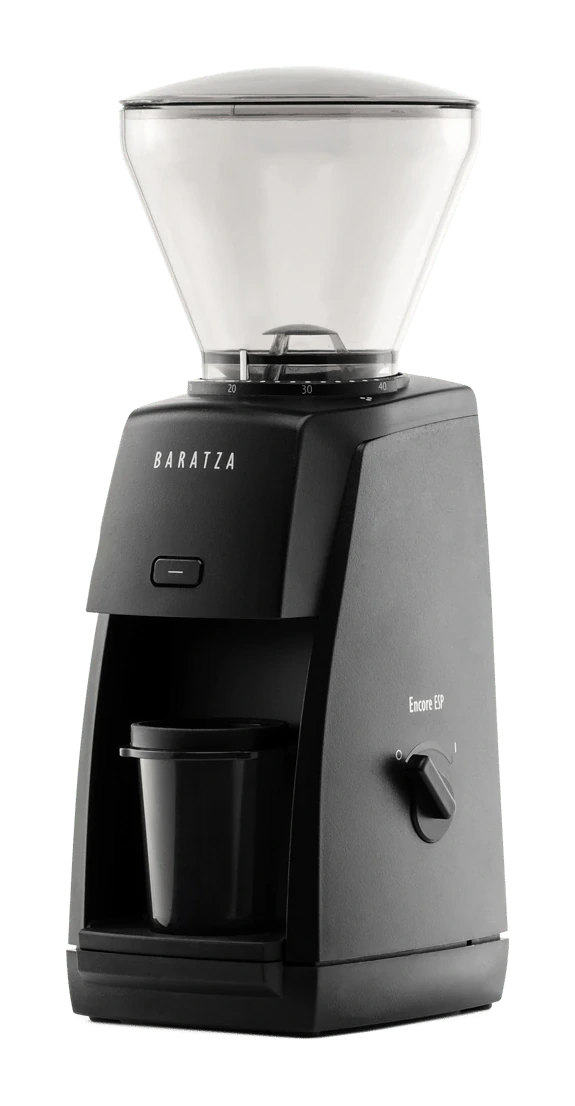
The Encore ESP is our Best value pick for espresso and other brewing methods. Its numbered settings are easy to record, and the included cup collects the grounds before you add them to your machine. It has fine espresso settings; the difference from the other picks is that you cannot stop the dial between clicks.
The 40 settings are split into two ranges. Settings 1–20 make small changes for espresso; settings 21–40 make larger changes for filter and other coarser brewing methods. That makes it a practical option when the same grinder needs to serve more than one kind of coffee.
For espresso, grind into the dosing cup and transfer the grounds into the portafilter—the handle that holds your machine’s filter basket. The supplied adapter supports transfer into 54 mm or 58 mm portafilters as directed in the manual. The larger grounds bin is used for filter brewing.
Specifications
| Burrs | Conical steel |
|---|---|
| Grind settings | 40 numbered steps |
| Espresso adjustment | Settings 1–20; smaller changes |
| Coarser brewing adjustment | Settings 21–40; larger changes |
| Grounds collection | Included espresso dosing cup and larger grounds bin |
| Grinding control | Manual on/off switch and pulse button |
Extended product analysis
Finding your setting
If you switch between espresso and filter, write down the setting that works for each. The number helps you return to a useful starting point, but a new bag of beans may still need a small change.
Within the espresso range, each click makes a small change. If one position gives a shot that runs too quickly and the next runs too slowly, the DF54 or Eureka lets you try a setting between those positions. That extra choice matters most when you want to fine-tune the result.
Controlling the portion
The on/off switch runs the grinder until you stop it; holding the pulse button lets you add a little more. There is no timed or weight-based stop to measure the portion for you. Weigh the grounds when setting up your coffee so you know how much you are using.
The dosing cup makes the transfer into an espresso basket manageable, though it remains an extra step compared with grinding directly into the handle. Check the cup and adapter arrangement for your basket size and pour or transfer carefully to avoid spills.
Build and bench use
The plastic body feels less substantial than the DF54. Starting and stopping the grinder is straightforward: there is a switch and a pulse button, with no screen or saved programmes to work through.
Leave room above the grinder to refill or remove the hopper, and enough space in front to lift out the cup or grounds bin. A tidy-looking footprint is less useful if those everyday jobs are awkward.
Coffee left inside and cleaning
Some grounds remain in the grinding path between uses. That matters when you change beans, because the next portion can contain coffee from the previous bag. Emptying the hopper does not clear everything below it.
Use the cleaning procedure in Baratza’s manual. Unplug the grinder before removing the hopper or burrs, and do not wash the burrs with water. When adjusting the grind, follow Baratza’s instruction to run the grinder or empty it of beans first.
Pros
- Numbered settings are easy to note and revisit
- A closely spaced espresso range plus settings for coarser brewing
- Included cup helps with transfer and weighing
- Simple on/off and pulse controls
Cons
- You cannot select a grind position between two clicks
- Some coffee remains inside between uses
- Plastic body feels less substantial than the DF54
You make espresso and other types of coffee and want simple controls with settings you can record.
You want to adjust between fixed clicks or have the grinder stop automatically at a programmed time or weight.
Eureka Mignon Specialità 55
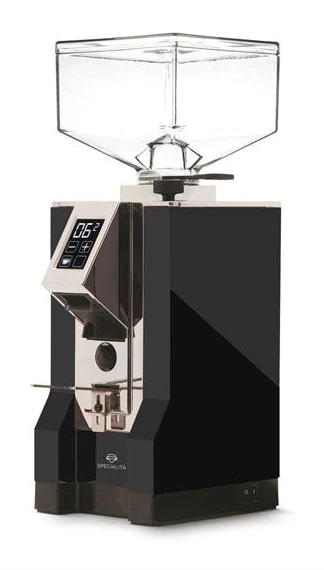
The Eureka Mignon Specialità 55 is our Best for espresso pick for a household making regular coffees from the same beans. Quiet operation, small grind adjustments and direct delivery into the espresso handle make it convenient once set up. It is less convenient when you frequently swap beans or move between espresso and filter.
The hopper keeps beans ready, while the touchscreen stores two grinding times for your usual portions. Coffee goes straight into the portafilter, so there is no separate cup-transfer step when your handle sits securely in the holder.
The adjustment dial has no fixed clicks. You can make small changes to the grind, although the small knob takes a careful touch. The standard Specialità 55 described here is the original model, rather than the separate Smart or UP versions.
Specifications
| Burrs | 55 mm flat hardened steel |
|---|---|
| Grind adjustment | No fixed steps |
| Portions | Two saved grinding times, plus continuous operation |
| Grounds collection | Directly into a supported portafilter |
| Standard bean hopper | 300 g |
| Height / width | 350 mm / 120 mm |
Extended product analysis
Set the time, then check the coffee
The timer controls how long the grinder runs, not the weight of the grounds. Use a scale to see how much coffee your chosen time produces, then adjust the time to suit your basket and recipe. Recheck after changing beans or the grind setting.
Once set, the two saved times reduce the repeated preparation involved in making the next drink. You do not need to fill the 300 g hopper to the top; keep an amount that makes sense for how much coffee you use.
Changing beans or brewing methods
The hopper and coffee left in the grinding path make frequent changes between regular and decaf less convenient than preparing one portion of beans at a time. Emptying the hopper alone does not remove all the old grounds.
The small dial is useful for gradual espresso changes, but returning from a much coarser setting can take care. Follow Eureka’s instructions when adjusting it, including running the grinder while making the specified adjustment. If you routinely switch brewing methods, the Encore’s numbered positions are easier to record.
Holder fit and keeping the bench tidy
Check that your coffee handle sits securely on the adjustable fork before relying on it to hold the handle unsupported. The handle shape, basket and any dosing funnel affect the fit.
Direct grinding removes a transfer step, but grounds can still fall outside a small basket or spill when you remove a full handle. A compatible funnel or cup may help with a particular setup; neither is assumed to be included.
Noise and cleaning
Eureka uses an anti-vibration design to reduce grinding noise, and several owners describe it favourably. That makes it worth considering when grinding noise bothers you or someone else in the house.
Unplug the grinder before cleaning. Keep loose grounds clear of the outlet and follow the manual for washing and fully drying the removable hopper. Internal burr cleaning and maintenance must follow Eureka’s instructions about trained, authorised personnel.
Pros
- Saved times reduce preparation between repeat coffees
- Small grind adjustments help refine espresso
- Grinds directly into a suitably supported espresso handle
- Noise-reducing design earns favourable owner feedback
Cons
- The timer does not weigh the coffee
- The small adjustment dial can be fiddly
- Frequent bean or brewing-method changes take more setup
- Holder fit and stray grounds depend on the basket and handle
Espresso is your main drink, you usually use the same beans and you value quieter grinding with less preparation between coffees.
You frequently switch beans or brewing methods, or want automatic weighing for every portion.
How to choose a coffee grinder
Buying advice
Start with the coffee you make
A grinder needs to suit the finest grind you actually use. Espresso needs small adjustments because the grind affects how quickly water flows through the basket. Filter and plunger coffee use coarser settings. If you make both, think about how easily you can move between settings and return to the previous one.
Choose a preparation routine you will use
Adding one weighed portion at a time is useful when you change beans or want to keep most of them stored separately. Leaving beans in a hopper makes consecutive coffees easier. Also consider where the grounds go: collecting them in a cup adds a transfer, while direct grinding needs a holder that suits your espresso handle.
Understand the adjustment
A stepped dial clicks between positions; a stepless dial moves without fixed stops. A larger setting count does not, by itself, tell you how small each change is. The Encore ESP deliberately uses smaller changes in its espresso range. A dial without fixed stops adds the option of adjusting between those positions.
Allow for the bench and the cleaning
Leave room to refill the beans, remove the cup or handle and reach the controls. Check the space under cupboards as well as the base on the bench. Grounds and coffee oils need regular cleaning, so look at the actual care instructions before buying rather than assuming every grinder comes apart in the same way.
Which one should you buy?
DF54 — The strongest fit here if you enjoy working on your espresso and trying different beans. It gives you adjustment without fixed clicks and a broad brewing range, while keeping the unused beans separate. The extra preparation is the deciding trade-off: if making several coffees quickly matters more than changing beans, the Eureka’s routine is more convenient.
Baratza Encore ESP — A useful starting point when one grinder needs to make espresso, filter and plunger coffee. The numbered positions help you record settings, and the espresso range is designed for small changes. It leaves stopping and weighing the coffee to you, and you cannot adjust between clicks. Its strength is straightforward flexibility across brewing methods, rather than automated portions.
Eureka Mignon Specialità 55 — The better match for a regular espresso setup using the same beans for several drinks. Its saved times and direct grinding reduce repeated preparation, and quieter operation is part of its appeal. Keep a scale for setup checks, allow time to adjust the small dial and check that the holder suits your coffee handle.
How we chose
Detailed methodology
This is a research-based guide; we have not tested all three grinders ourselves.
Eureka’s customer average excludes four duplicate entries. Some ratings were rewarded with coupons, and the source does not publish every verified review.
Useful FAQs
Is a separate grinder worth buying if my espresso machine already has one?
It can be worthwhile if there is something you want to improve, such as grind adjustment, changing beans or using the grinder for filter coffee. A built-in grinder saves bench space and may already do everything you need. Decide which part of your current setup is limiting you before buying another appliance.
Does the Encore ESP have enough adjustment for espresso?
It is designed for espresso as well as other brewing methods. The first 20 settings make smaller grind changes; the remaining settings make larger changes for coarser brewing. You cannot choose a position between clicks, which is the adjustment difference from the DF54 and Eureka.
Is a flat-burr grinder better than a conical-burr grinder?
Not automatically. The terms describe the shape of the parts that grind the beans. The whole grinder matters: its adjustment, how it delivers the grounds and whether it suits your brewing method. Burr shape alone is not a reason to expect better coffee.
Should I choose single dosing or a hopper?
Preparing one portion at a time is useful if you regularly change beans or alternate regular coffee and decaf. A hopper is convenient when several drinks use the same coffee. Think about your busiest morning, rather than choosing the routine that sounds most specialised.
Do I need a scale with these grinders?
A scale helps you use a consistent amount of coffee. It is part of preparing portions for the DF54 and checking how much the Encore has ground. With the Eureka, use it to set and recheck a grinding time; the timer itself does not measure weight.
Can these grinders make both espresso and filter coffee?
The DF54 and Encore ESP cover espresso and coarser brewing methods. The Specialità can grind coarser too, but repeatedly finding its espresso setting again is less convenient. For a household switching methods every day, consider the adjustment and preparation routine as well as the grind range.
Can I change straight from regular coffee to decaf?
You can change beans, but some coffee may remain in the hopper or grinding path. A single-dose routine makes the change simpler; it does not guarantee that no previous coffee remains. Follow the grinder’s instructions for clearing grounds, particularly if avoiding caffeine is important to you.
Will the cup or holder fit my espresso machine?
Check the cup, adapter or holder against your handle and basket. The Encore manual describes its cup arrangement for 54 mm and 58 mm portafilters. On the Eureka, check that the handle sits securely in the fork. A grinder working with your espresso machine does not mean every supplied cup or holder is a perfect fit.
How should I clean a coffee grinder?
Unplug it before maintenance and use the manufacturer’s procedure for your model. Brush away loose grounds, keep water away from electrical parts and do not wash steel burrs with water. Only remove parts the instructions allow you to handle; internal work may require an authorised service provider.