Breville Dual Boiler BES920
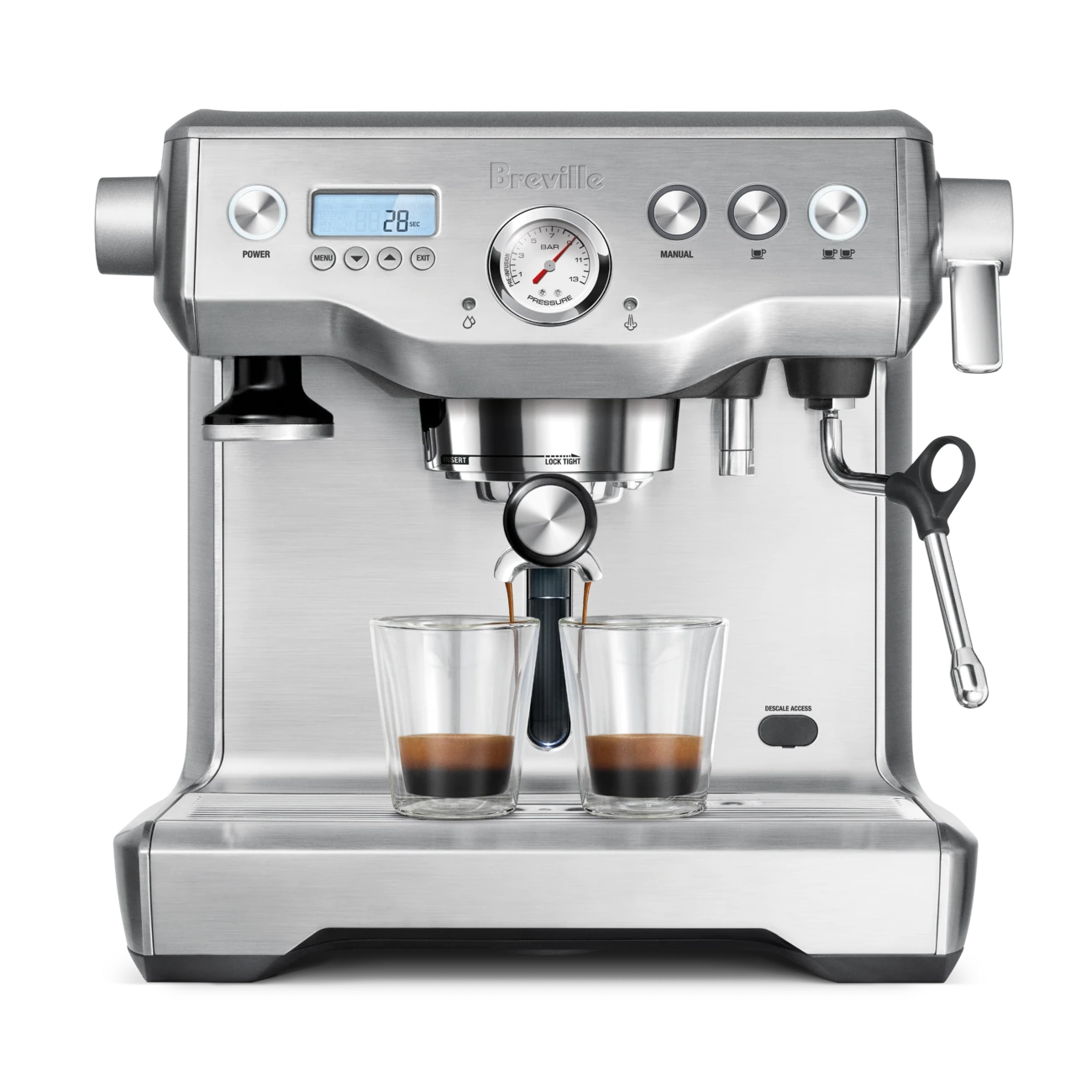

The Breville Dual Boiler BES920 is our Best overall pick for people who regularly make milk coffees and want more control over their espresso. You can brew coffee and steam milk at the same time. It takes up more bench space than the Bambino, though, and you still need to budget for a grinder.
Separate boilers heat the brewing water and supply steam for the milk wand. That means you can work on the coffee and milk together, which is useful when making drinks for two or more people.
You can program the shot or control it yourself, and adjust the brewing settings as you learn what suits your coffee. You still grind the beans, fill and press the coffee into the basket, and froth the milk yourself. This is a machine for getting involved in the process.
Specifications
| Specification | BES920 |
|---|---|
| Australian model | BES920BSS, Brushed Stainless Steel |
| Heating | PID-controlled brew boiler and separate steam boiler |
| Brew and steam | Simultaneous operation |
| Portafilter | 58 mm stainless steel |
| Water tank | 2.5 L |
| Shot controls | Programmable or manual |
| Published dimensions, W × D × H | 37.9 × 40.3 × 37.1 cm |
| Documented AU/NZ electrical rating | 220–240 V, 50–60 Hz; 1800–2200 W |
| Australian domestic warranty | 2-year repair warranty; Australian Consumer Law rights also apply |
A closer look
Why the separate boilers matter
If you make flat whites for the household each morning, separate boilers save you switching back and forth between coffee and milk. With the Bambino and Gaggia, those jobs happen one after the other. The BES920 lets you do both together.
There is also more room to experiment with brewing settings than on the Bambino. That is useful if you enjoy adjusting your espresso, but less valuable if you mainly want a straightforward morning coffee.
Heat, grind and the finished shot
Kaffeemacher’s Dual Boiler test found steady brewing temperatures after its overseas machine had warmed up. Allow warm-up time as the BES920 manual directs before brewing.
Start with coffee ground finely and evenly enough for espresso, then adjust the amount in the basket and the shot to suit your taste. Changing one thing at a time makes it easier to work out what helps. Extra machine settings cannot make up for a grinder that struggles with espresso.
Bench space and upkeep
The machine is 37.9 cm wide and 40.3 cm deep. Measure the space for the whole setup, including the grinder, the handle at the front, access to the water tank and room to move the milk jug under the wand.
After making milk, wipe the steam wand and release a short burst of steam as the manual directs. Rinse the baskets and follow the machine’s filter and cleaning alerts. For descaling, let it cool and follow the complete BES920 manual procedure. Hot water and steam can burn; leave boiler servicing to an authorised service provider.
Pros
- Brews espresso and steams milk at the same time
- More brewing settings, with programmed or manually controlled shots
- Larger 2.5 L tank means fewer refills for the same amount of coffee
Cons
- Takes considerably more bench space than the Bambino
- Higher machine outlay than the compact value pick
You regularly make milk coffees and want to brew and steam together, with more control over your espresso.
You mostly make one drink, have limited bench space or want automatic milk frothing.
Breville Bambino BES450
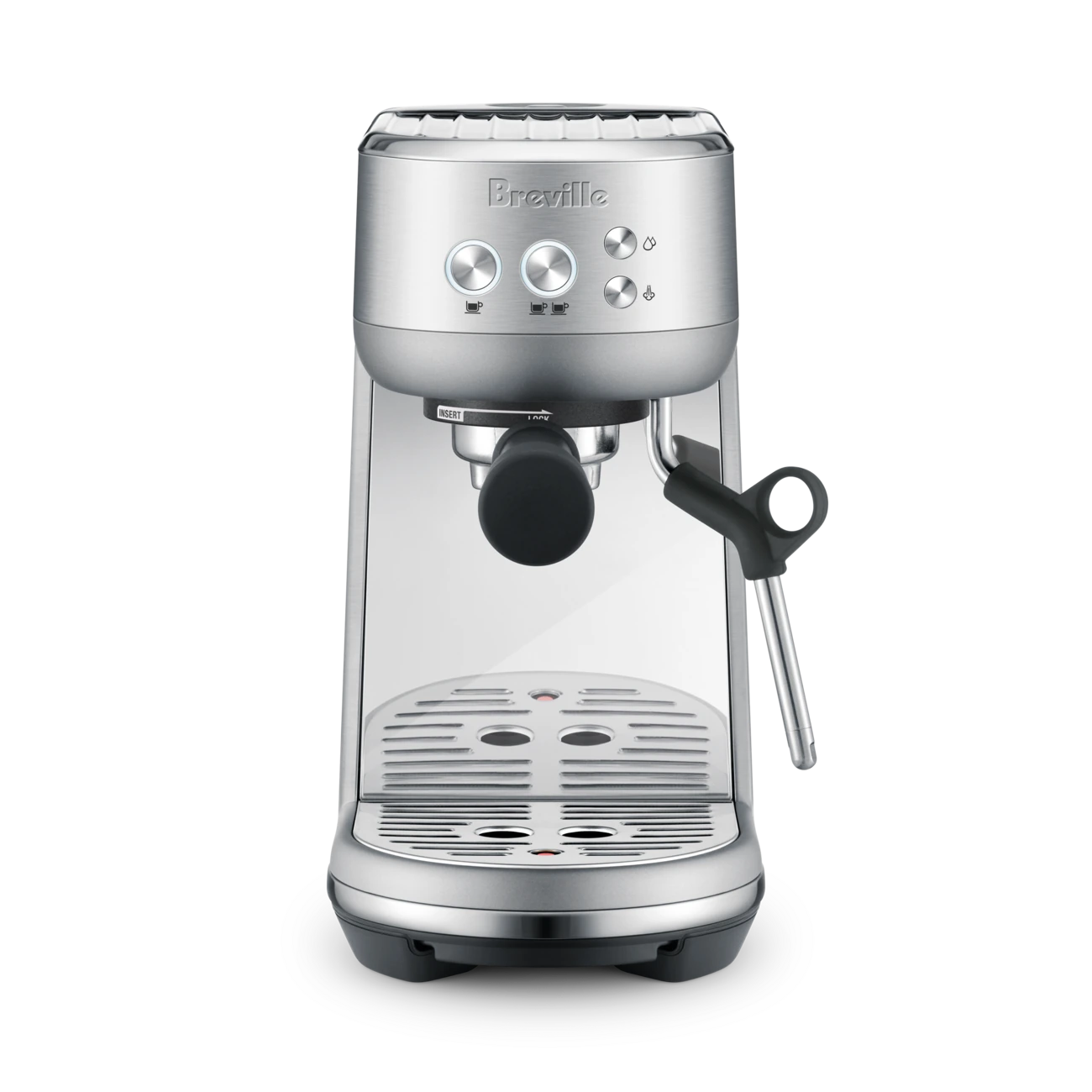
The Breville Bambino BES450 is our Best value / compact pick for a smaller kitchen. At 15.5 cm wide, it leaves more room for a separate grinder and costs less than the Dual Boiler. You still get espresso and a manual steam wand, but make the coffee and milk one after the other.
The ThermoJet heater starts quickly, and electronic temperature control helps keep the brewing water steady. Breville’s three-second heating claim does not mean the cup and coffee handle are warm too. Follow the manual’s steps for running water through the machine and warming the handle before brewing.
You make the espresso and froth the milk yourself. That gives you room to practise without a large machine taking over the bench. Making several milk coffees takes longer because you cannot brew and steam at the same time.
Specifications
| Specification | BES450 |
|---|---|
| Australian finishes | Brushed Stainless Steel BES450BSS4JAN1; Sea Salt BES450SST4JAN1; other finishes available |
| Heating and temperature control | ThermoJet with PID electronic control |
| Portafilter | 54 mm |
| Double-basket dose guidance | 16–19 g in the manual; adjust for basket and coffee |
| Water tank | 1.4 L |
| Milk preparation | Manual steam wand; brewing and steaming in stages |
| Published dimensions, W × D × H | 15.5 × 35 × 32 cm |
| Electrical rating | 220–240 V; 1300–1600 W |
| Australian warranty | 1-year limited product warranty; Australian Consumer Law rights also apply |
A closer look
Compact without dropping the essentials
The narrow body is the Bambino’s main advantage in a small kitchen. Just remember to leave space beside it for a grinder, behind it to reach the tank, and around the steam wand for the milk jug.
The Bambino looks after brewing temperature electronically. You get fewer settings and readouts than on the Dual Boiler, so there is less to adjust on the machine while you learn how the grind and amount of coffee affect the taste.
Getting the basket and milk right
For the double basket, the manual suggests 16–19 g of ground coffee. Use that range as a starting point, then adjust to suit your beans and the taste of the espresso.
For pre-ground coffee, use a dual-wall filter basket. For freshly ground beans, a single-wall basket gives you more control, but you will need an espresso grinder with fine adjustments. Check which baskets come with your chosen finish. Milk frothing is manual on the Bambino; the Bambino Plus has an automatic milk option.
The limits of the smaller setup
In Tom’s Guide’s Bambino review, the overseas test machine made flavourful espresso and smoothly frothed milk. The small body still gives you room to practise both parts of making a coffee.
You may need to hold the small machine steady when turning the coffee handle in or out. If you regularly make several milk coffees, the bigger drawback is having to brew and steam separately. Decide whether that matters more to you than the space saved.
Cleaning and care
Warm and rinse the coffee handle before use, then dry the basket before adding coffee. After milk, wipe the wand and release a short burst of steam as the manual directs. Follow the BES450’s cleaning and descaling instructions; the Bambino Plus has its own procedures.
Take care around hot water and the steam wand. Let hot parts cool and disconnect the machine before maintenance as the manual directs. Leave electrical repairs to an authorised service provider.
Pros
- Narrow 15.5 cm body
- Fast-heating ThermoJet system
- Electronic control helps keep brewing temperature steady
- Lower machine cost leaves more of the setup budget for a grinder
Cons
- Cannot brew and steam at the same time
- Fewer brewing settings and readouts than the Dual Boiler
- May need steadying when fitting or removing the handle
You want everyday espresso and milk coffees from a compact machine, with more of your budget available for a separate grinder.
You want automatic milk frothing, more brewing settings or the ability to brew and steam together.
Gaggia Classic E24
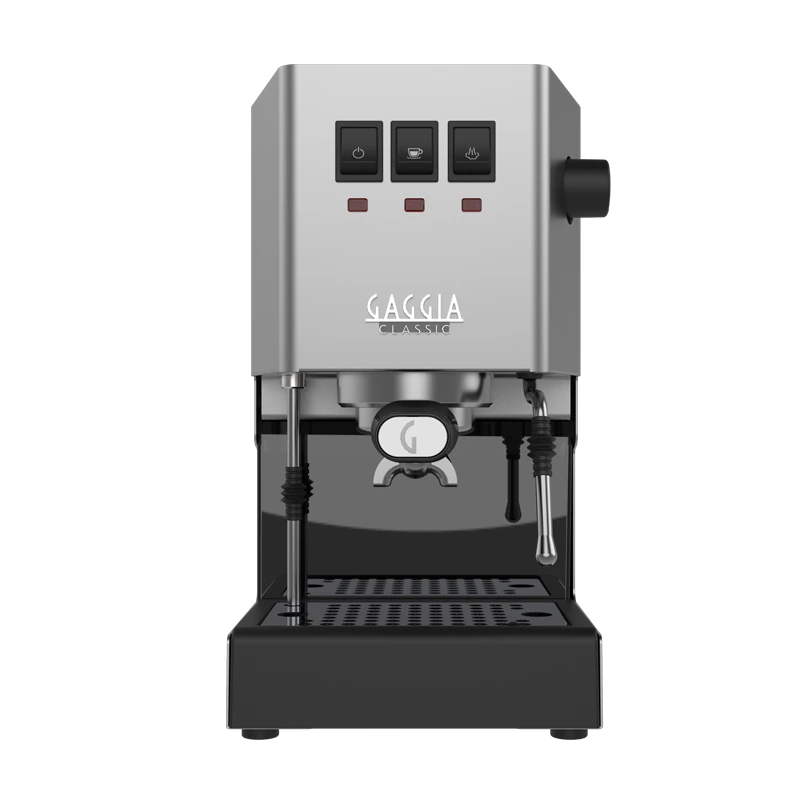
The Gaggia Classic E24 is our Best for enthusiasts pick for someone who enjoys learning the steps behind a good espresso. You control the brewing and milk frothing, and need to get used to the boiler’s heating cycle. The Bambino is easier to start with; the Dual Boiler is more convenient for several milk coffees.
Separate switches turn the machine on, start brewing and select steam. The controls are simple; getting consistent espresso takes more practice. The E24 does not have the electronic brewing-temperature controller used in the two Brevilles, so you need to learn its heating cycle.
One boiler heats the water for both coffee and steam. After frothing milk, follow the manual’s cooling steps before brewing another espresso. If you enjoy making coffee by hand, that can be part of the appeal. If you want a quick round of lattes, the extra steps can become a chore.
Specifications
| Specification | Classic E24 |
|---|---|
| Model generation | Classic E24 brass-boiler generation; RI9481 / SIN035R manual family |
| Heating and milk preparation | Single brass boiler; sequential brewing and steaming |
| Temperature control | No PID electronic control; brewing timing takes practice |
| Group and portafilter | Lead-free brass group; 58 mm stainless-steel filter-holder |
| Water tank | 2.1 L |
| Milk | Manual steam wand |
| Published dimensions, W × D × H | 23 × 24 × 38 cm |
| Published electrical specification | 230 V, 50 Hz; 1200 W manufacturer variant |
| Origin | Made in Italy |
| Local warranty | 2-year defects cover for eligible AU/NZ goods under Gaggia’s terms; Australian Consumer Law rights also apply |
A closer look
Learning when to brew
You cannot set a precise brewing temperature on the E24. Getting repeatable espresso means learning the machine’s heating cycle as well as adjusting the grind and amount of coffee. Follow its manual’s brewing routine rather than copying timings for another Classic model.
Kaffeemacher and Tom’s Guide both found that getting consistent espresso from their overseas E24 test machines took attention to brewing temperature. That reinforces the main trade-off: expect to spend time learning the machine.
Milk drinks take a few more steps
You froth the milk yourself with the steam wand. Making one cappuccino can be a satisfying routine; making several means more switching between coffee and steam. The Dual Boiler is the more convenient choice for that job.
Use the wand’s rubber grip and keep clear of hot metal, water and steam. Follow the Australian E24 manual for filling the boiler ready for use and cooling it after steaming. Online instructions for an older Classic may describe a different machine.
Making room and buying locally
Allow working space around the machine, not just room for its base. You need to reach the water tank, turn the coffee handle and move a milk jug beneath the steam wand. Those everyday movements matter when fitting it into a crowded kitchen.
Check that your machine and seller qualify for Gaggia’s two-year Australian and New Zealand defects cover, and keep the receipt. Australian Consumer Law rights apply separately from that warranty.
Cleaning and descaling
Clean the baskets, coffee handle and steam wand regularly. After milk, wipe the wand and release steam as the manual directs. Follow the E24’s approved descaling procedure, let hot parts cool, and disconnect the machine before maintenance as instructed. Leave electrical work and changes to the boiler or pressure controls to an appropriately authorised service provider.
Pros
- Control when brewing starts and stops, and froth the milk yourself
- Supplied filters let you use ground coffee or supported pods
Cons
- Getting consistent espresso takes practice; no PID electronic control
- Brew and steam separately, then cool as directed before the next espresso
- Less convenient than the BES920 for several milk drinks
You enjoy learning a hands-on coffee routine and are happy to practise brewing and milk frothing.
You want quick, straightforward drinks or expect the enthusiast pick to be easier to use than the Bambino.
Budget for the machine and grinder
Buying advice
Budget for the whole setup: machine, espresso grinder if you want fresh beans, and the cleaning products the manual specifies. Check that everything will fit on your bench before choosing the machine.
A Bambino with a good espresso grinder can be a more useful setup than a larger machine paired with a grinder that struggles to grind finely and evenly enough. Decide first whether you need to brew and steam together, want extra brewing settings, or need to save space. Our Best Coffee Grinders Australia guide covers separate espresso grinders.
How each machine makes coffee and milk
Buying advice
ThermoJet — Bambino
The Bambino starts quickly and makes the coffee and milk one after the other. Allow time to prepare the coffee and warm the handle and cup as the manual directs.
Dual boiler — BES920
Separate boilers let you brew espresso and steam milk together. That is especially useful for several milk coffees. You also get more brewing adjustments, but still need to allow warm-up time and prepare the coffee yourself.
Single boiler — Gaggia E24
One boiler does both jobs, so you switch from brewing to steaming and follow the cooling steps before the next espresso. Choose it because you enjoy learning that routine. For easier milk coffees, the Brevilles are the stronger fit.
Coffee handles, baskets and accessories
Buying advice
A portafilter is the handle that holds the filter basket of ground coffee. The Bambino uses a 54 mm size; the Dual Boiler and E24 use 58 mm. That affects which baskets and tampers fit. A bigger diameter alone does not mean better espresso.
Choose accessories listed for your exact machine. A 58 mm handle made for another brand may not lock into the Gaggia, and baskets need the right depth as well as diameter. Start with the supplied equipment, then decide whether an accessory would solve a problem you actually have.
Which one should you buy?
Breville Dual Boiler BES920 — choose it for several milk coffees and the ability to brew and steam together, with more settings to adjust your espresso.
Breville Bambino BES450 — choose it to save bench space and leave more of your budget for a separate grinder.
Gaggia Classic E24 — choose it if you enjoy a hands-on routine and are happy to practise the steps between brewing coffee and frothing milk.
How we chose
Detailed methodology
We compared how these machines make espresso and milk drinks, their controls, bench space, cleaning needs, Australian sellers, warranty and value. We used manufacturer information, original professional tests and customer feedback. This is a research-based guide; we have not tested all three machines ourselves.
Worth Buying scores are our editorial assessments, separate from customer stars. The Breville ratings come from The Good Guys; some may be incentivised. Gaggia’s ratings come from the UK E24, with Australian specifications and warranty checked separately.
Useful FAQs
Do I need a separate grinder for these espresso machines?
None has a grinder built in. If you buy whole beans, you will need a separate espresso grinder. You can use pre-ground coffee with a compatible basket, or the E24’s supported pods.
Is a dual-boiler espresso machine worth it?
It is most useful when you regularly make several milk coffees. The BES920 lets you brew and steam together and offers more brewing adjustments. If you mostly make one drink, the Bambino’s smaller size may be more useful to you.
What is the difference between this guide and Best Coffee Machines Australia?
This guide covers espresso machines without built-in grinders. Best Coffee Machines Australia covers machines with grinders included, such as the BES876, BES870 and La Specialista Opera.
Is the Gaggia Classic E24 easier to use than the Bambino?
Generally, no. The Bambino heats quickly and handles brewing temperature electronically. With the E24, you need more practice with the heating cycle and must follow the cooling steps after steaming before making another espresso. Choose the Gaggia because you enjoy that involvement.