
Bosch WNA254U3AU
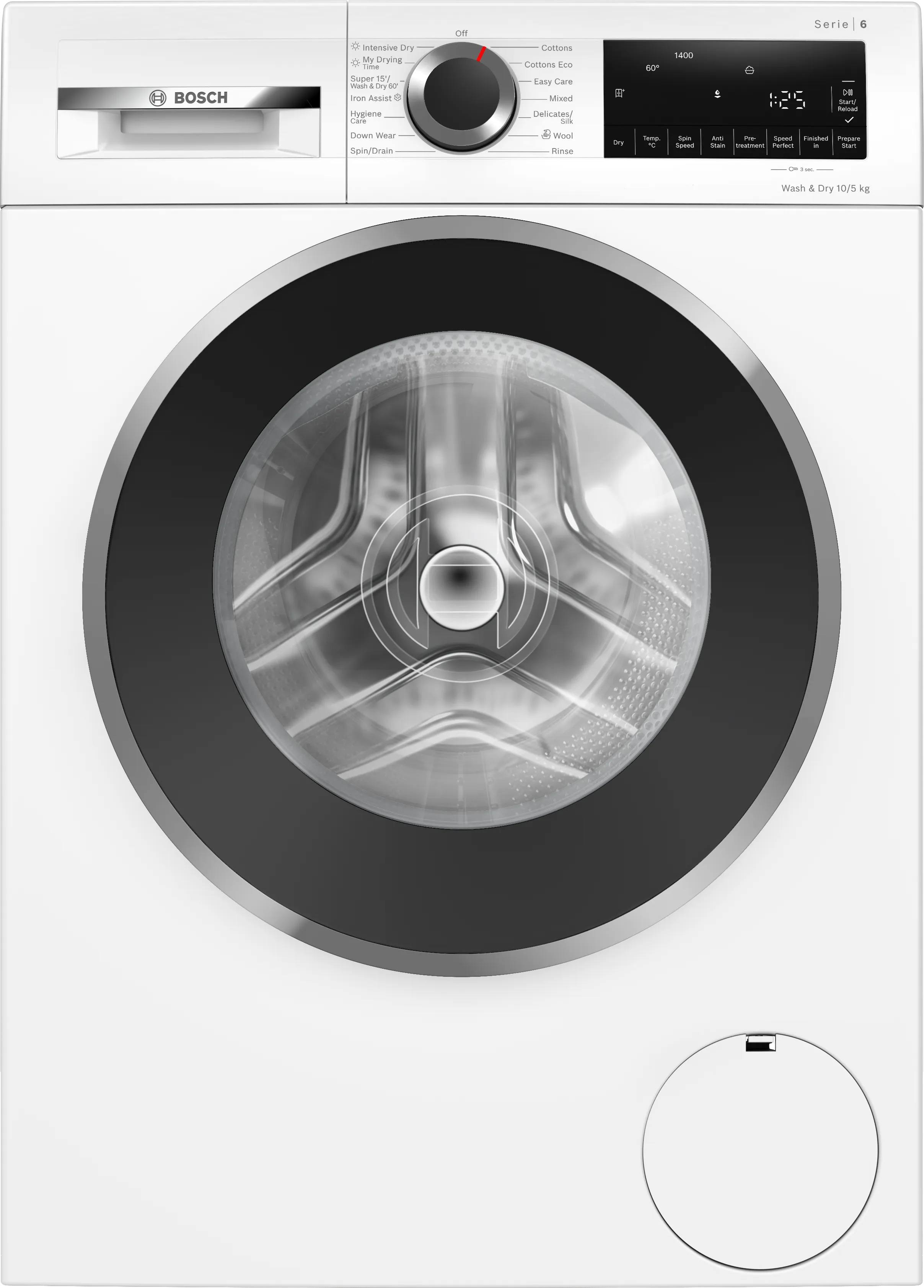
Its appeal is practical: useful washing capacity, conventional controls and fewer connected features to manage. The compromise is a 5kg maximum drying load. Fill the washer to its 10kg limit and you will need to remove laundry before drying.
Specifications
| Maximum capacity | 10kg washing; 5kg drying on suitable cotton programs. |
|---|---|
| Mixed-load program | up to 4kg washing or 2.5kg washing and drying. |
| Wash & Dry 60 | up to 1kg; maximum spin speed 1400rpm. |
| Dimensions | 598mm wide × 848mm high; 590mm cabinet depth, 635mm including the closed front and 1072mm with the door open at 90°. |
| Energy labels | 4.5-star washing, 3-star drying. WELS: 4.5 stars, 86L per rated wash. |
| Conventional condenser drying | no Wi-Fi or automatic detergent dosing. |
| Standard appliance warranty | two years. Separate motor-cover terms and registration requirements apply. |
Extended product analysis
Washing and drying in everyday use
The Bosch suits a household that washes larger loads when needed but runs smaller loads through to dry. Owner reports are generally positive about cleaning and convenience, although some are only early impressions. There are also accounts of damp laundry needing more drying, so we would not promise cupboard-ready results from every mixed load.
Separate heavier towels from lighter clothing and use the appropriate dryness setting. A drum that looks comfortable for washing may still be too full for effective drying. The 60-minute wash-and-dry option is useful for a few items, with its 1kg limit doing much of the work behind that headline.
Eco programs can take a long time. Bosch's manual lists 5 hours 50 minutes for its 10kg Cottons Eco test and 3 hours 40 minutes for a separate 5kg intensive-drying test. Those are different loads, not a demonstrated 10kg uninterrupted wash-and-dry cycle.
Controls, fit and upkeep
The dial makes the main programs easy to find, although the Prepare Start control has confused some owners at first. There is no automatic dosing: measure detergent for the load, soil level and water conditions rather than filling the drawer by habit.
The 590mm cabinet figure understates the space occupied by the front of the machine. Allow for the closed door, rear connections and enough room to unload and service it. Installation also matters to vibration and drainage; delivery does not necessarily include levelling or a full operational check.
Condenser cleaning features do not remove routine care. Check the door seal and drum for lint, clean the detergent drawer, and follow the manual for pump maintenance. Drying needs the water supply connected and available.
Warranty and repair
The standard whole-appliance warranty is two years. A longer motor warranty covers a specific component, not every repair. Do not rely on an old five-year promotional badge without checking whether your purchase date qualifies.
Bosch has an Australian repair and parts route, but that is not a promise of immediate appointments or stock for every part. Keep the invoice and appliance identification details accessible.
Pros
- Useful 10kg washing capacity.
- Conventional controls without app dependence.
- Good support from the inspected owner reports.
- Widely available from Australian sellers.
Cons
- Only 5kg maximum drying capacity.
- Some owners need extra drying.
- Uses water during drying.
- No auto dosing or Wi-Fi.
you want one machine, wash-to-dry loads are modest and simple operation matters more than smart features.
you regularly need to dry large family loads or want to wash the next load while the first dries.
Samsung WD90H19AHSSA
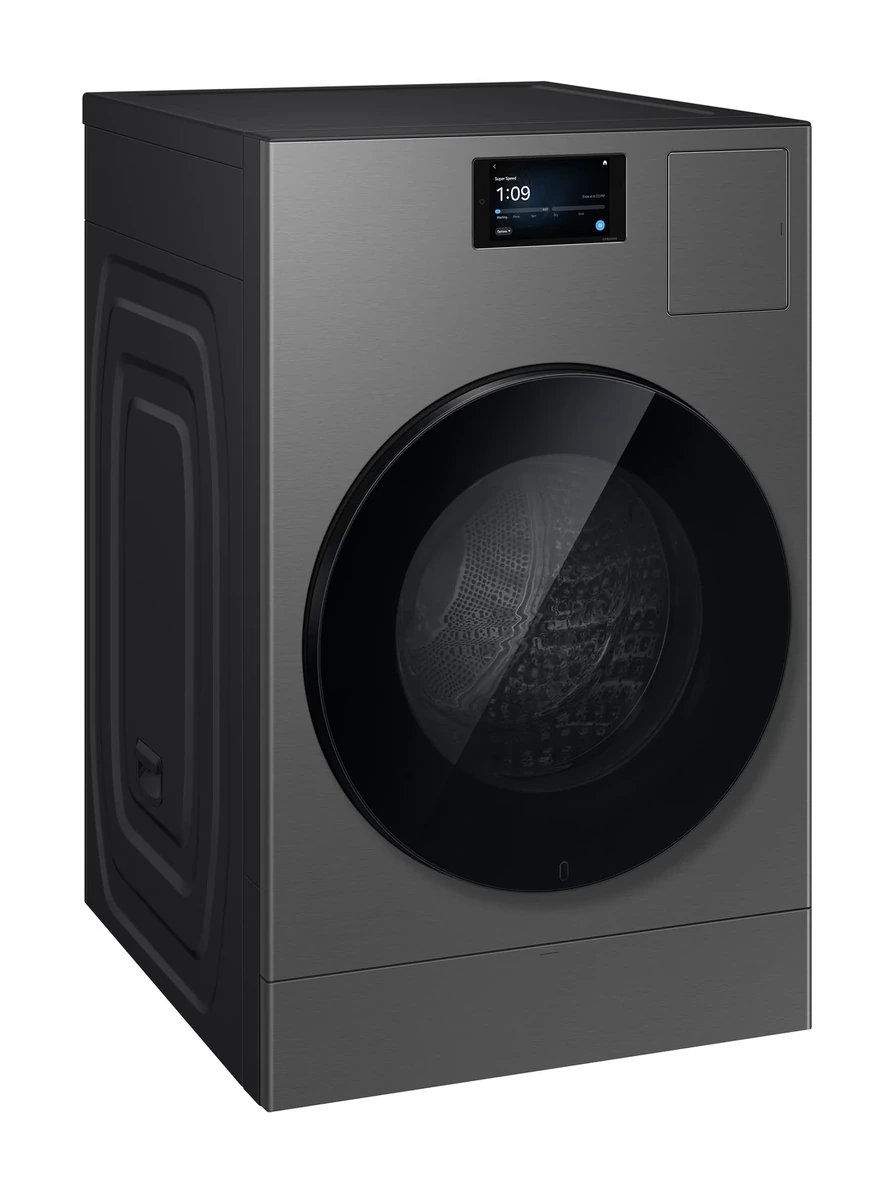
At 686mm wide, 1110mm high and 145kg, this is a different installation proposition from a conventional underbench combo. Measure the route into the house as carefully as the laundry itself. For households that can accommodate it, avoiding the transfer between machines can be very convenient.
Specifications
| Maximum capacity | 19.5kg washing; 10kg drying. |
|---|---|
| AI Wash & Dry+ program limit | 9kg. |
| Heat-pump drying | maximum spin speed 1100rpm. |
| Dimensions | 686mm wide × 1110mm high × 875mm deep; appliance weight 145kg. |
| Energy labels | 4.5-star washing and 10-star drying. WELS: 4 stars, 195L per rated wash. |
| Features | Automatic detergent dispensing, 7-inch touchscreen, automatic door opening and SmartThings connectivity. |
| Standard appliance warranty | 24 months; eligible current purchases have separate ten-year Digital Inverter Motor parts cover. |
Extended product analysis
Why the heat pump matters
A heat pump recirculates heat for drying, which can reduce electricity use compared with conventional resistance-heated drying. Samsung's drying label is strong, but it applies to its nominated test program. It does not establish what every mixed load will cost or how long it will take.
The 10kg dry capacity is generous in absolute terms. It is still much less than the 19.5kg washing limit, and the AI combined program is limited to 9kg. If you routinely fill that large drum for washing, expect to split the load before drying.
Early owners generally like the automatic wash-to-dry convenience. A separate first-hand assessment by GadgetGuy also found good cleaning and relatively quiet operation.
The fast cycle is for a small load
Samsung's current Australian page claims 69 minutes to wash and dry a 3kg test load. The test used a defined cotton/polyester mix and particular settings and temperatures. It is not a promise for a full drum, towels or bedding.
Bulkier items and different dryness targets can take longer. If finishing several loads quickly is the priority, separate appliances still have the advantage of working at the same time.
Maintenance is part of the purchase
The lint filter needs cleaning after every drying cycle. The manual also calls for heat-exchanger attention when prompted, with a reminder after 180 uses. Automatic condenser cleaning does not make the machine maintenance-free.
Keep access to the filters and service areas clear. Follow the instructions carefully around the heat-exchanger fins, and let the appliance cool before draining or cleaning the pump. If filters are neglected, the convenience you bought the machine for can quickly be lost to slower drying.
Space, software and support
Samsung specifies minimum alcove clearances of 25mm at each side, 25mm above and 50mm behind, plus 550mm in front. Connections and the delivery route may require more. Plan professional handling for the weight rather than treating it as an ordinary two-person lift.
Normal programs can be selected on the machine. SmartThings features such as remote control and AI Energy Mode need Wi-Fi and a Samsung account.
Automatic door opening helps release damp air after a cycle. Leave space in front and keep children and pets away from the opening. The long motor warranty should not be confused with cover for the touchscreen, pump, heat-pump system or every labour charge.
Pros
- Large 10kg maximum drying capacity.
- Heat-pump drying with a strong energy label.
- Auto dosing and unattended wash-to-dry convenience.
- Controls are available on the appliance itself.
Cons
- Exceptionally large and heavy.
- Expensive compared with conventional combos.
- Regular lint and heat-exchanger care remains necessary.
- Limited long-term exact-model evidence.
you expect to dry frequently, want to avoid transferring laundry and can accommodate its size and access requirements.
you have a normal 600mm cavity, difficult stairs or doorways, or need every full 19.5kg wash dried in one run.
LG WXC10-1412W
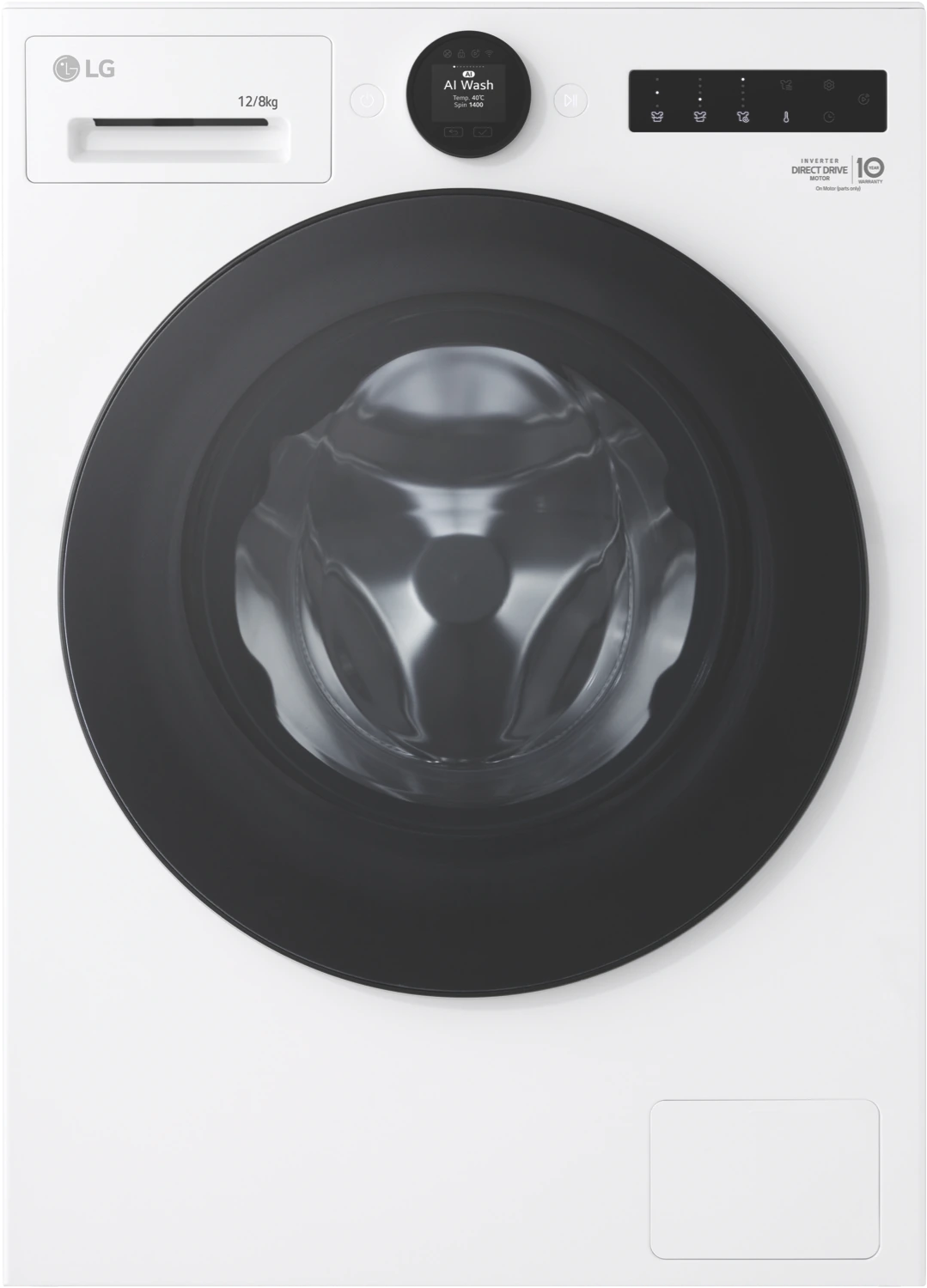
Its 12kg wash and 8kg maximum dry capacities are useful in a 600mm-wide machine. Drying uses substantial water, and lint can carry into the next load.
Specifications
| Maximum capacity | 12kg washing; 8kg drying on suitable programs. |
|---|---|
| AI Wash+Dry | 3kg; Wash+Dry 60: 1kg. |
| TurboClean 39 | a 5kg wash-only claim; maximum spin speed 1400rpm. |
| Dimensions | 600mm wide × 850mm high; 615mm cabinet depth, 655mm closed-door depth and 1135mm with the door open at 90°. |
| Weight | 78kg. |
| Energy labels | 5-star washing and 3.5-star drying. WELS: 5 stars, 86L per rated wash; LG lists 110L for its rated drying test. |
| Features | ezDispense automatic dosing and ThinQ connectivity. |
| Warranty | two years parts and labour, plus eight additional years of parts cover on the Inverter Direct Drive motor. |
Extended product analysis
Capacity without an oversized cabinet
The LG offers more washing and drying capacity than the Bosch without moving to Samsung's much larger body. That suits households with bulky washing and limited appliance space, especially when much of the laundry goes onto a line.
The program limits still matter. Its AI Wash+Dry program handles 3kg, well below the 8kg maximum drying figure. TurboClean's 39-minute claim is a 5kg wash, not a full wash-and-dry time.
Auto dosing can save the daily measuring step, but it still needs the correct detergent and sensible settings. More detergent is not a cure for poor cleaning, and excess detergent can make rinsing harder.
Installation
Correct installation, load balance and a solid floor matter; persistent knocking should be investigated rather than dismissed as normal. Water-pipe hammering may need a plumbing assessment as well as an appliance check.
Keep the retailer's installation responsibilities clear and report abnormal noise promptly.
Drying and lint care
The water-cooled condenser uses tap water as part of drying. LG's rated drying figure is 110L, separate from its wash-water figure. Actual use depends on the load and program, but this is a meaningful drawback if you dry often.
Lint can collect around the door seal or carry into the next wash. Wipe the seal after drying, keep the drum and dispensing system clean, and follow the pump-filter instructions.
For buyers who mainly want a large washer with drying available for wet weather or occasional loads, these compromises may be acceptable. For daily drying, Samsung's heat-pump approach is more compelling if it fits, or consider separate machines.
Pros
- Large 12kg washing capacity in a 600mm-wide cabinet.
- Up to 8kg drying on suitable programs.
- Automatic detergent dosing.
- Strong wash energy and water labels.
Cons
- AI combined program limited to 3kg.
- Substantial water use during drying.
- Lint transfer and cleaning after drying.
washing capacity and auto dosing come first, you mostly line-dry, and you can accept the maintenance and evidence limitations.
you expect to dry every load automatically.
Serious Contenders We Assessed
Electrolux EWW1043R7WCS: a useful 10kg/6kg proposition with good wash efficiency. Some owners like its convenience, while others mention damp drying or awkward controls. The available feedback mixes current and older versions, leaving less confidence in a clean current-model assessment than we would want for a featured recommendation.
Electrolux EWW1242R9WCS: increases capacity to 12kg/8kg and adds automatic dosing. Its two-star drying label is a drawback for frequent use, and the owner evidence did not make a stronger overall case.
Hisense HCF8I1215HB: a compact heat-pump alternative with attractive capacity. However, CHOICE's testing found very long Eco drying and damp laundry after the regular program at full load. Smaller regular-program loads performed better, but we would not choose it for efficient full-load turnaround.
Beko BWDB8420W1 and BWDB9540W: both offer conventional drying in smaller-capacity machines. The first has only 4kg drying capacity and uncertain attribution of older syndicated reviews; the second has a mixed owner record, including drying and early service complaints.
Westinghouse WWW9024M5WAS: an accessible 9kg/5kg option, but a large headline review count did not outweigh the mixed drying and service experiences.
Fisher & Paykel WD8560F1: has a much longer owner history, including favourable experiences, but also repeated accounts of deteriorating drying and lengthy cycles. The larger heat-pump WD1871HG1 needs even more space and lacked a mature owner record.
Haier HWD1280PXB1 and Miele WTR871WPM: neither supplied a sufficiently convincing combination of current-model owner evidence and practical advantage to displace these choices. Reviews of the earlier Miele WTR870WPM should not automatically be attributed to its successor.
Buying and owning a combo
Buying advice
Start with the loads you need dried
Think about a typical drying load, not the largest wash you might run once a month. Sheets, towels and mixed garments behave differently. Read the program table before assuming the advertised maximum works on your preferred automatic cycle.
A combo can finish one load while you are doing something else, but it cannot wash a second load during drying. For frequent back-to-back laundry, separate machines are usually the better workflow.
Understand the efficiency labels
Washing stars, drying stars and WELS measure different things. WELS is the water-efficiency label; it does not tell you how well a machine dries clothes. Annual energy figures also rely on standardised assumptions and should not simply be added together as though they describe one real-world wash-and-dry cycle.
A heat pump can reduce drying energy, but check the actual program and duration. A high star count is less useful if the setting that earns it is too slow for your routine.
Measure the whole installation
Include door projection, hoses, taps, drain, power access and working space. LG specifies at least 20mm each side and 100mm behind; Samsung needs a substantially larger space and careful delivery planning. Follow the exact manual rather than treating the cabinet dimensions as the required cavity.
Use a stable floor, remove transport bolts, level the machine and secure the drain properly. Arrange suitable handling for heavy appliances and keep access for servicing. Do not assume the delivery crew will connect, level and test everything unless that service is included.
Keep up with maintenance
Clear lint from accessible seals and filters, clean the detergent system and run the specified cleaning cycles. Samsung's lint filter needs attention after every dry. Conventional condenser models still need water available during drying.
A sudden change in noise, repeated damp loads or leaks deserves investigation. Maintenance advice should not be used to dismiss a fault or an unresolved service complaint.
Use it safely
Follow the garment care labels and appliance manual. Do not tumble-dry items contaminated with cooking oil, petrol, solvents or other flammable substances, or foam/rubber items the manual prohibits. Washing may not remove all contamination.
Do not stop a drying cycle and leave hot laundry piled together. Follow the manual's cooling instructions. Keep children and pets away from the drum, door and controls, and check inside before starting. Isolate the power and let water cool before cleaning a pump filter. Use the specified earthed electrical connection; do not improvise with extension leads or overloaded powerboards.
Which should you buy?
Bosch WNA254U3AU is the sensible starting point for modest drying loads and straightforward operation.
Samsung WD90H19AHSSA makes the strongest case when frequent drying matters enough to justify its size, weight and cost.
LG WXC10-1412W suits large-load washing and occasional drying. Allow for substantial water use during drying and lint cleaning.
If none fits your routine, buying separate appliances may be the better decision.
How we chose
Detailed methodology
We compared Australian models using manufacturer specifications and manuals, owner reviews, available independent testing, installation requirements and ownership costs. We checked model identity and repeated reviews before using customer ratings. WBA scores are our research-based editorial judgements; we have not personally tested these machines. Customer stars describe the stated source pools and are separate from our scores.
Some ratings may be incentivised.
Frequently asked questions
Can a combo dry everything it washes?
Only when the load fits the selected program's drying limit. That may be lower than the machine's maximum drying capacity. A full wash load often needs splitting.
Does a combo need an external vent?
These models do not need the external exhaust duct used by a vented dryer. They still need the manufacturer's ventilation clearances, water and drainage connections.
Do washer-dryers use water while drying?
Conventional water-cooled condenser models do. Heat-pump machines work differently, but do not assume every water use is zero: cleaning and other functions can still need it.
Will the clothes be ready to put away?
They can be, with the right load, program and dryness setting. Mixed fabrics, bulky items and overloading can leave some pieces damp. Owner reports here show that an extra drying run is sometimes needed.
Is the quickest cycle a realistic daily setting?
It can be useful for small, lightly soiled loads. The advertised times have specific conditions: Bosch and LG's 60-minute combined programs are for 1kg, while Samsung's 69-minute claim uses a 3kg test load.
Is a ten-year motor warranty the same as a ten-year machine warranty?
No. It covers the specified motor under its terms, often with limits on parts, labour or registration. Check whole-appliance cover separately. Your Australian Consumer Law rights are additional to the manufacturer's express warranty.
What should I do about loud knocking or leaks?
Stop using a leaking or unusually violent machine and follow the manual's safety instructions. Have installation, transport bolts, levelling and connections checked, and contact the seller or manufacturer for diagnosis. Do not keep running it simply because someone suggests the noise is normal.