
Roborock Saros 20
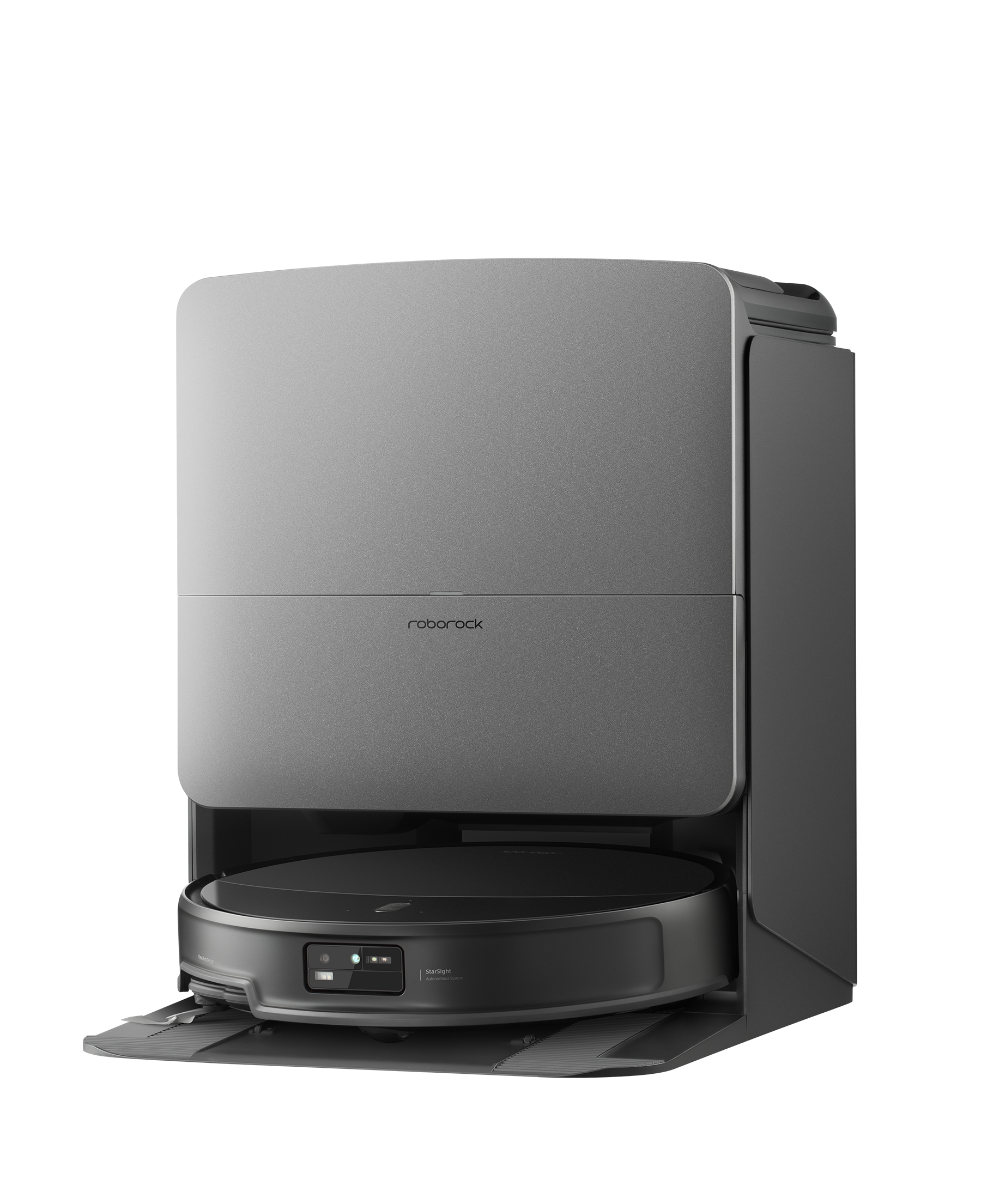
Its DuoDivide split brush is designed to guide hair towards the suction inlet. That can reduce wrapping on the roller, but hair can still collect in the bin or dock inlet. Check those areas during the first few cleans, especially with long human hair or heavy shedding.
Specifications
| Australian model | RR-S2052-03-BLK, black robot and multifunction dock. |
|---|---|
| Robot dimensions | 350 × 353 × 79.8 mm, as listed by Roborock. |
| Main brush | DuoDivide split brush system. |
| Robot dustbin | 259 mL. |
| Battery | 6,400 mAh; claimed runtime up to 200 minutes in quiet conditions, not a promise for carpet cleaning. |
| Mopping | spinning pads with automatic removal in supported cleaning modes. |
| Navigation | StarSight 2.0, with camera-based object recognition and optional live-view features. |
| Threshold claim | up to 4.5 cm plus 4.3 cm across a suitable double-tier obstacle; this is not an 8.8 cm single-step clearance. |
Extended product analysis
What the hair tests tell us
Vacuum Wars reports 88% pickup in its flattened carpet-hair test and no measured brush wrap in its separate long-hair test. The tests use different hair lengths and surfaces: good pickup and low tangling are related, but they are not the same result. RTINGS also found strong pet-hair pickup using Balanced suction, Standard pathing and carpet boost.
Those results favour it when carpet hair is the main job. Performance will still depend on the pile, settings and mix of fur and human hair. Successful pickup also does not guarantee that a packed bin will empty cleanly into the dock.
The ownership trade-off
The Australian GadgetGuy review describes hair accumulating into balls and troublesome transfer into the dock during household use.
Check the first runs closely: does hair reach the bag, does the robot return reliably, and are rugs staying dry? Keep a record of persistent faults and raise them promptly with the seller.
Mops, furniture and privacy
Automatic mop removal is useful when you want a proper vacuum-only run over carpet. Confirm the selected mode actually leaves the pads at the dock. The low body can reach under furniture that stops taller robots, but measure the real gap and allow clearance; a quoted minimum height is not a guarantee against rubbing.
The camera features add another buying decision. If live viewing is not useful to you, leave it disabled and review app permissions and account security. Roborock publishes a security-support timetable, but that is not a promise of indefinite cloud service or evidence that an app is risk-free.
Pros
- Strong independent carpet-hair test results
- Low 79.8 mm body
- Automatic mop removal in supported modes
- Split brush designed to reduce hair wrap.
Cons
- Reports of hair-transfer clogs
- Camera and live-view privacy considerations
- Dock and water tanks need regular care.
Carpet hair is your main cleaning job and automatic mop removal matters.
Hard-floor mopping is the main job, or you do not want a camera-equipped robot.
Dreame L40 Ultra VE
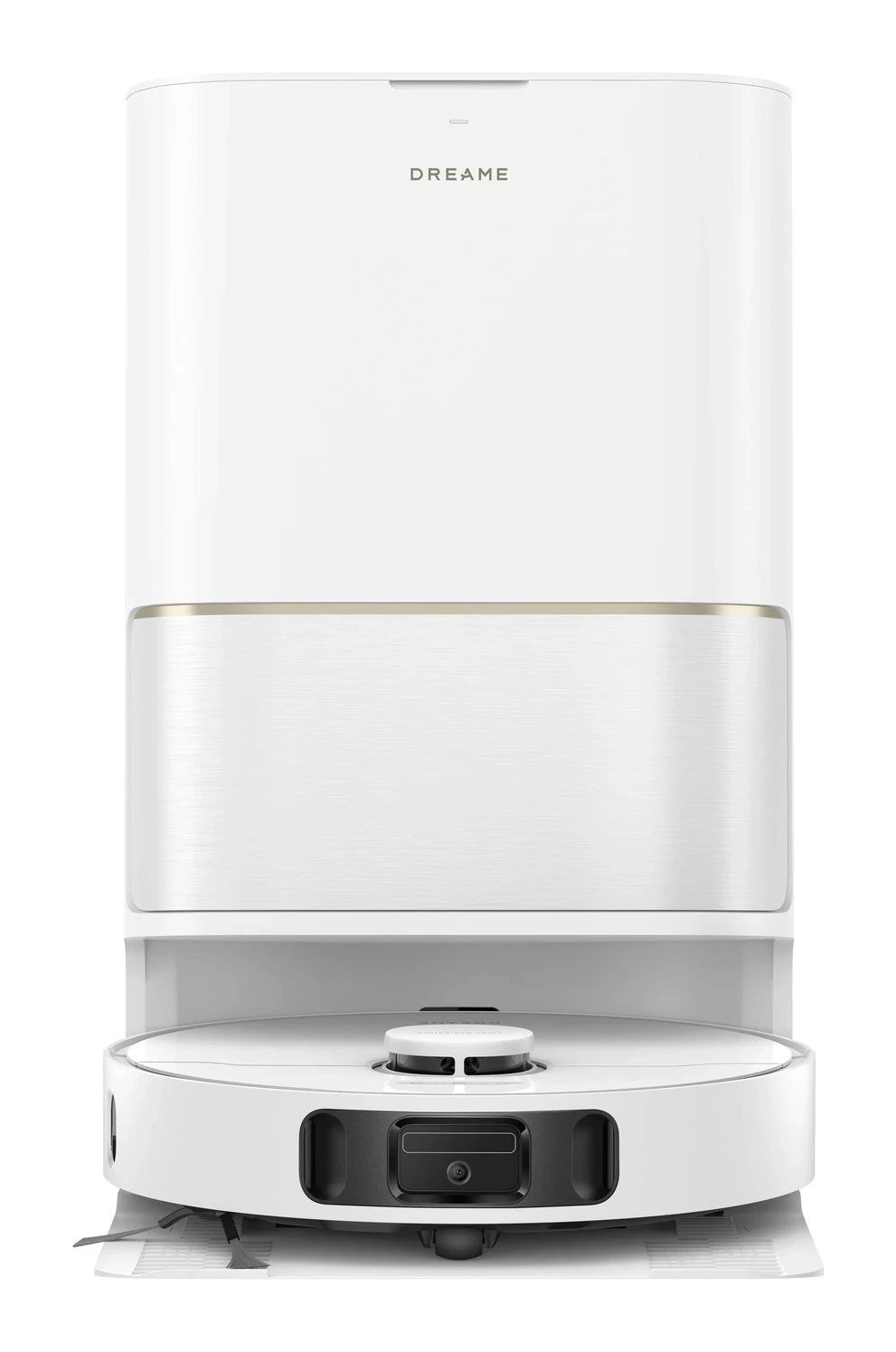
Buy the exact Australian R2579G package. It includes a standard rubber main brush; the TriCut cutting brush is optional. Automatic detergent dosing also needs an optional dispenser. Check the box contents, because other L40 variants can have different inclusions.
Specifications
| Australian retail SKU | R2579G; L40 Ultra VE, not L40 Ultra or L40s. |
|---|---|
| Robot dimensions | 350 × 350 × 97 mm. |
| Battery | 5,200 mAh; advertised runtime up to 230 minutes in quiet, vacuum-only use. |
| Robot dustbin | 300 mL; dock dust bag: 3.2 L. |
| Dock water tanks | 4.5 L clean water and 4 L used water. |
| Mop lift | 10.5 mm; high-pile rugs can still touch damp pads. |
| Claimed threshold crossing | 20 mm, depending on the shape and approach. |
| Dock treatment | mop washing up to 80°C and drying up to 50°C; these are dock-treatment figures, not water temperatures applied to the floor. |
Extended product analysis
Where it makes sense
For daily fur on tiles or sealed hard floors, the appeal is the combination of vacuuming and spinning pads that the dock cleans afterwards. That reduces handling between runs. It is a more involved system to own than a simple emptying dock, though, with water tanks, a wash area and pads to keep clean.
An anti-tangle claim should not replace a quick inspection around the roller ends and axle. Short, regular cleans are a sensible starting point during heavy shedding; adjust them after seeing how quickly your particular bin fills.
Rugs and obstacles
A small mop lift is enough for some low rugs, not all carpet. Use no-mop zones or remove the pads when necessary, and check that fringes cannot reach a brush. Bowls, trailing leads and soft toys deserve floor preparation even when the robot offers obstacle detection.
The extending mop can help clean closer to edges; the side brush does not extend.
Dock space and support
Measure the dock location with room to lift out the tanks, not just enough space to slide the base into an alcove. The manual calls for more than one metre clear in front and more than five centimetres at either side. Empty and rinse the used-water tank regularly; leaving dirty water sitting is an avoidable source of smell.
The manufacturer warranty listed for this model is two years. If a retailer advertises longer cover, get the terms for your purchase in writing. Finding bags and pads does not tell you how quickly a less common repair part can be supplied.
Pros
- Dock washes and dries mop pads
- Spinning pads for regular hard-floor mopping
- Extending mop reaches closer to edges.
Cons
- Limited mop clearance around thick rugs
- Brush and dock need regular hair cleaning
- Cutting brush and detergent dispenser are not standard inclusions
- Dock needs space for access and cleaning.
You mostly clean hard floors and want the dock to handle pad washing and drying.
Thick rugs dominate your home, or you cannot allow room to lift out and clean the water tanks.
Tapo RV20 Max Plus
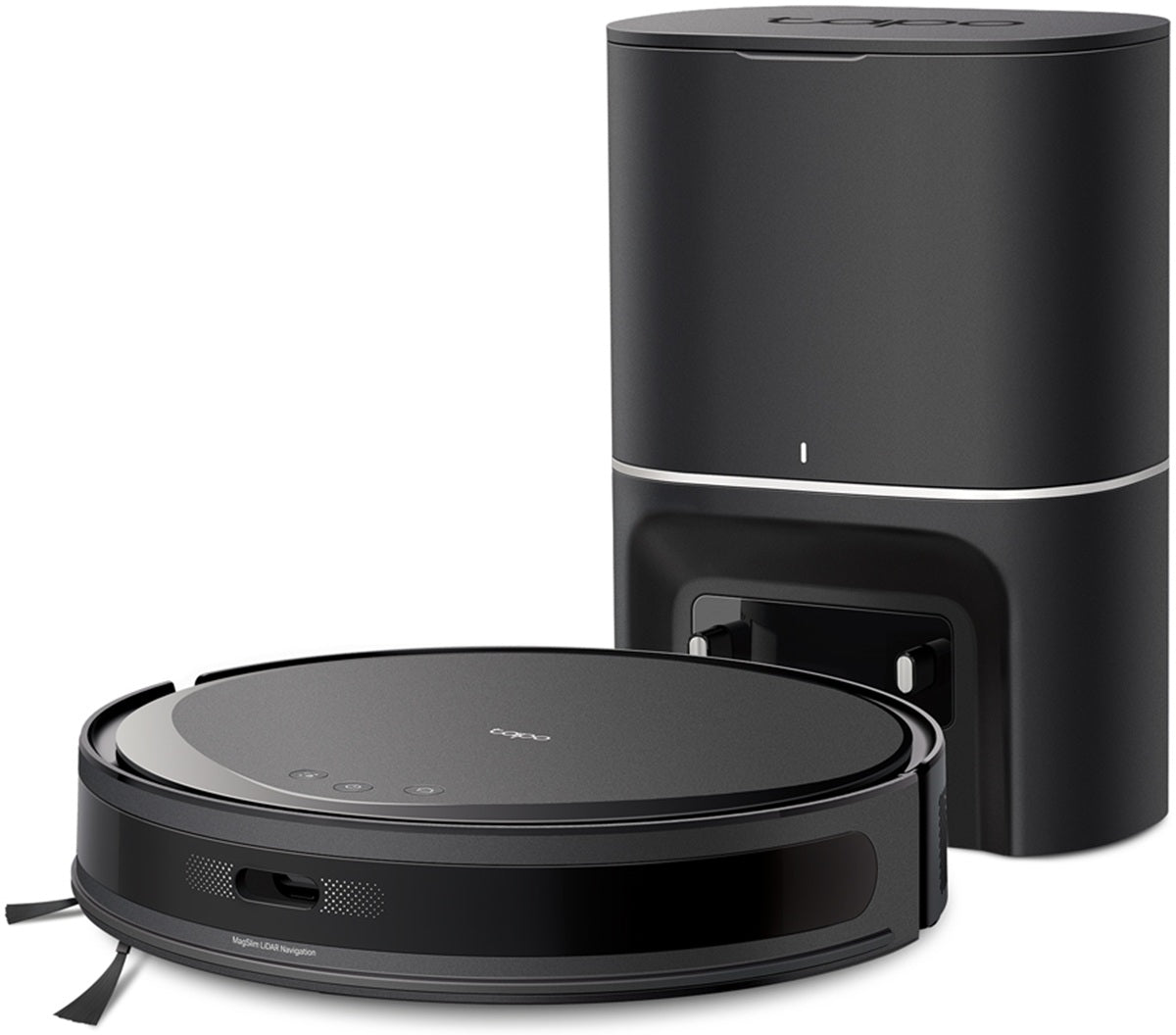
Laser mapping helps it cover rooms in an orderly way. Small clutter such as charging cables or dog toys still needs clearing before a run.
Specifications
| Exact model | Tapo RV20 Max Plus, black, with auto-empty station. |
|---|---|
| Robot dimensions | 330 × 330 × 83 mm. |
| Mapping | MagSlim LiDAR and IMU — laser mapping supported by motion sensors. |
| Robot dustbin | 300 mL; dock bag: 3 L. |
| Water tank | 300 mL, feeding a fixed wiping pad. |
| Battery | 2,600 mAh; advertised runtime up to 180 minutes under quiet-mode conditions. |
| Dock dimensions | 228 × 164 × 330 mm, as listed in the datasheet. |
| Carpet handling | no automatic mop lift; remove the mop assembly for vacuum-only carpet cleaning. |
Extended product analysis
Everyday fur, with some preparation
Owners report useful results with cats and shedding dogs, including homes where frequent cleaning stops loose hair building up. There are also reports of initial dog-hair clogs, jams and difficulty returning to charge. Check its first few runs before deciding how often to schedule it.
The self-emptying dock is the main convenience: collected dirt goes into a bag instead of needing the small onboard bin emptied after every routine run. A large hair clump can still interfere with that transfer. If the bag is barely filling while the robot bin stays packed, investigate the blockage rather than simply adding more cleaning runs.
Mopping and mixed floors
This is a damp wiping pad, not a pair of scrubbing pads with a washing station. It can help with light everyday marks on suitable hard floors, but you will refill the tank, wash the pad and remove the assembly before carpet cleaning. Keep it off flooring that the floor manufacturer says should not be wet-mopped.
That extra handling is manageable in a mostly hard-floor flat. It becomes less attractive when the route repeatedly crosses rugs, or when you want vacuuming and mopping to happen unattended across a mixed-floor home.
Parts, charging and long-term use
TP-Link lists an Australian repair route for this model. Genuine bags, brushes and pads are also listed locally. Before buying, ask how a replacement battery would be supplied and fitted; the listings do not establish its availability or cost.
Firmware notes describe changes to docking and low-battery return. For charging trouble, check the contacts and dock position as the manual directs, then seek support if it continues.
Pros
- Compact bagged emptying dock
- Low 83 mm body
- Laser room mapping
- Genuine bags, brushes and pads listed in Australia.
Cons
- Small clutter needs clearing
- Mop needs washing and removal by hand
- Replacement-battery availability needs checking.
You want daily loose-hair pickup and self-emptying, and can handle the mop and clear clutter.
You need hands-off mopping across mixed floors or reliable avoidance of small toys and cables.
Before you schedule a clean
Check for pet accidents, loose cables and small toys first. Obstacle recognition is a helping hand, not a guarantee that a robot will avoid faeces, vomit or urine. A robot can spread an accident through several rooms. Supervise the first runs, keep pets away from the moving robot and dock, and only schedule unattended cleaning when the floor is suitable. Do not use these machines to collect liquids or hazardous debris.
Living with a robot in a pet home
An emptying dock changes where dirt goes; it does not eliminate maintenance. Start by checking the brush ends, wheels, bin and dock inlet after each run. Once you know how your pet's hair behaves, follow the manual's schedule and shorten it when shedding increases. Wash filters only if the manual permits it, and let washable parts dry completely before refitting them.
With a washing dock, empty dirty water and rinse the tank regularly. Clean the tray and pads before residue becomes a smell. Use only the cleaning solution approved for the machine, in the specified place and quantity. Never improvise with foaming floor cleaner or disinfectant in a water tank.
Allow room in front of the dock for a clean approach and above it for bags or tanks. An inaccessible station is one you are less likely to maintain. Multi-floor maps do not let a robot climb stairs: you still carry it, arrange charging and check that the correct map is selected.
Before buying, look beyond bags and pads. Ask how a worn battery, damaged wheel or faulty dock is handled, who pays freight when applicable and whether a repair estimate is available. A manufacturer's warranty is additional to Australian Consumer Law rights; those rights do not automatically end on the warranty's expiry date. The remedy depends on the circumstances and nature of the failure. ACCC guidance explains the distinction.
How to choose for your home
Start with the floor that causes the work
For carpet, prioritise evidence about hair worked into the pile. For hard floors, look at whether hair reaches the bin and transfers successfully into the bag. Suction pressure, measured in pascals, is a specification rather than a direct measure of cleaning: brush design, airflow and the cleaning route matter too.
Match the routine to the hair
Long human hair can wind around axles even when short pet fur clears well. Several shedding pets can fill a small bin quickly. During the first week, inspect what the robot collects and what it leaves behind. More frequent shorter runs may suit your home better than waiting for a large accumulation.
Be honest about clutter and rugs
If toys and cables regularly cover the floor, budget time to move them. Use no-go zones around feeding stations where practical, then check that the real cleaning route respects them. For rugs, mop removal is more dependable than assuming a small lift clears every pile. Fringes and lightweight mats can cause problems even on a vacuum-only run.
Measure the awkward places
Check the gap under your lowest furniture, the shape of doorway thresholds and the space around the dock. A rounded ramp and a square-edged step of the same height are different obstacles. Leave a margin instead of buying to a maximum climbing or minimum-height claim.
Which robot vacuum should you buy?
Roborock Saros 20 suits carpet-heavy pet homes. Its controlled hair results are the strongest of these three; GadgetGuy's household test also found hair-transfer blockages.
Dreame L40 Ultra VE is the hard-floor mopping choice. The washing dock is useful, provided you have room to maintain it and understand which accessories are optional.
Tapo RV20 Max Plus is the simple self-emptying choice. It suits routine cleaning in clear rooms when manual mop handling is an acceptable trade-off.
Serious Contenders We Assessed
Dreame X50 Ultra: It offers useful obstacle handling, but tests disagree on how well it removes hair embedded in carpet.
Roborock Q7B+: Some owners report good routine hair collection, while others describe problems with carpet pickup, docking or battery life. Similar Q7 names can refer to different hardware or packages, so check the exact model and local support before buying.
Roborock S8 MaxV Ultra: RTINGS found it better than the Saros 20 at lifting carpet hair. Roborock now lists it as discontinued, although new stock remains for sale. We have left it out of our picks because it is no longer in production.
Roborock Qrevo Curv: The original Curv has strong independent mopping results. Its Australian store page now directs buyers to a replacement model, and we could not confirm dependable local supply. The L40 Ultra VE is easier to source through the Australian retailers listed here; that is not a claim that it scrubs stains better.
eufy L60 Hybrid SES: Its dock can cut hair from the roller, which may appeal if brush cleaning is your main annoyance. We prefer the Tapo for its low body and compact station. Both need floor preparation and manual mop handling.
How we chose
Detailed methodology
We compared exact-model documentation, independent tests, owner feedback and Australian sales and support information. WBA has not tested these robots hands-on. Our /10 scores are editorial judgements.
Customer stars use the screened ratings shown for each source. Tapo’s figure comes from a recent sample rather than the full listing. Six of the 12 included Saros ProductReview ratings disclosed incentives. How customer ratings work explains the screening policy.
Frequently asked questions
Can a robot safely avoid pet accidents?
Do not rely on it. Even sophisticated object recognition can miss an accident or encounter it from an awkward angle. Inspect the floor first and stop the robot if a pet is unwell or an accident is possible.
Does more suction mean better pet-hair pickup?
Not necessarily. The brush has to loosen the hair, airflow has to carry it and the cleaning path has to cover the area. Look for comparable hair tests rather than choosing the highest Pa figure.
Will an anti-tangle brush stop all hair maintenance?
No. Hair can collect around brush ends, wheels, the bin or the dock inlet even when little winds around the main roller. Check those areas regularly.
Can I leave the mop fitted on carpet?
That depends on the model, mode and carpet. The Tapo needs its mop assembly removed. The L40 Ultra VE has limited lift, so deeper pile may still touch it. The Saros 20 can leave its pads at the dock in supported modes; confirm it has done so before a carpet-only run.
Will a robot replace my normal vacuum?
It can reduce routine floor cleaning, but it will not clean stairs or upholstery and may leave embedded dirt or edge debris. Keep another vacuum for those jobs and for areas the robot cannot reach.
Are cameras and app maps a privacy concern?
They are worth considering. Review the app's permissions, sharing options and account protection. Disable remote viewing if you do not need it. A robot without a live-view camera can still use an account, network connection and stored maps.
What if the robot is recalled?
Follow the notice for the exact model and affected batch. Stop using an affected product as directed and contact the supplier for the stated remedy. Check Product Safety Australia rather than assuming that an older recommendation establishes current safety.